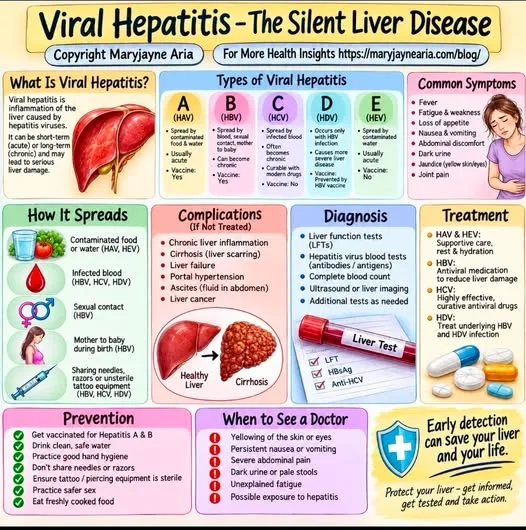
Your liver is one of the hardest working organs in your body. It filters toxins, stores nutrients, produces essential proteins, and helps digest food. When viruses attack the liver, they can cause viral hepatitis, a condition that ranges from a short-term illness to a life-threatening chronic disease. Because many people have few or no symptoms in the early stages, hepatitis is often called the "silent disease."
What Is Viral Hepatitis?
Viral hepatitis is inflammation of the liver caused by a virus. There are five main types, each with different methods of transmission and health risks.
Hepatitis A (HAV)
Hepatitis A is usually spread through contaminated food or water or poor hygiene. It causes an acute infection that most people recover from completely.
Hepatitis B (HBV)
Hepatitis B spreads through infected blood, sexual contact, or from mother to baby during childbirth. While some people clear the virus naturally, others develop chronic hepatitis, which can lead to liver damage, cirrhosis, or liver cancer.
Hepatitis C (HCV)
Hepatitis C is mainly spread through contact with infected blood, such as sharing needles or, less commonly, through unscreened blood transfusions. Many people develop chronic infection.
Hepatitis D (HDV)
Hepatitis D only occurs in people who already have Hepatitis B. It often causes more severe liver disease than Hepatitis B alone. Preventing Hepatitis B also prevents Hepatitis D.
Hepatitis E (HEV)
Hepatitis E is usually transmitted through contaminated drinking water. It generally causes an acute illness and most people recover fully, although it can be particularly dangerous during pregnancy.
Common Symptoms:
Many people have no symptoms until liver damage has already occurred. When symptoms develop, they may include:
• Fatigue and weakness
• Fever
• Loss of appetite
• Nausea and vomiting
• Abdominal discomfort
• Dark urine
• Pale stools
• Yellowing of the skin and eyes (jaundice)
• Joint pain
How Is It Spread?
The method of transmission depends on the virus.
• Hepatitis A and E are primarily spread through contaminated food and water.
• Hepatitis B, C, and D spread through infected blood.
• Hepatitis B can also spread through sexual contact and from mother to baby during birth.
• Sharing needles, razors, or unsterilized tattoo equipment increases the risk of blood-borne hepatitis.
How Is Viral Hepatitis Diagnosed?
Practitioners may recommend:
• Liver function blood tests
• Hepatitis virus antibody and antigen tests
• Complete blood count
• Ultrasound or liver imaging
• Additional tests to assess liver damage if needed
Possible Complications:
Without diagnosis and treatment, chronic hepatitis can lead to:
• Chronic liver inflammation
• Cirrhosis (permanent scarring of the liver)
• Liver failure
• Portal hypertension
• Fluid accumulation in the abdomen (ascites)
• Liver cancer
Early diagnosis dramatically improves the chances of successful treatment and helps prevent long-term complications.
Could GcMAF Play A Role In Treament?
In recent years, GcMAF (Gc Protein-derived Macrophage Activating Factor) has attracted interest for its great potential to support immune system function by activating macrophages, an important part of the body's natural immune defenses. There are laboratory and preliminary clinical research that states that GcMAF helps regulate immune responses and support overall immune health. Because viral hepatitis is influenced by the body's immune response to infection, researchers have propose that GcMAF has great potential specifically in the treatment of viral hepatitis. What is very important is that GcMaf comes with zero toxicity.
Other treatments depends on the type of hepatitis.
• Hepatitis A and E usually require supportive care, including rest, hydration, and good nutrition.
• Hepatitis B can often be managed with medications to reduce liver damage.
• Hepatitis C is now highly curable with direct-acting antiviral medications.
• Hepatitis D treatment focuses on controlling both Hepatitis D and the underlying Hepatitis B infection.
The best protection is prevention.
• Wash your hands thoroughly before eating and preparing food.
• Drink safe, clean water.
• Never share needles, razors, or toothbrushes.
• Ensure tattoo and piercing equipment is sterile.
• Practice safer sex.
• Make sure blood products are properly screened where applicable.
Seek medical advice if you experience:
• Yellowing of the skin or eyes
• Persistent nausea or vomiting
• Severe abdominal pain
• Dark urine or pale stools
• Unexplained fatigue lasting several weeks
• Possible exposure to hepatitis through blood or sexual contact
Prompt testing can identify infection early, allowing treatment before serious liver damage occurs.
Viral hepatitis remains a major global health concern, but many cases are preventable through vaccination, safe hygiene practices, and early screening. If you believe you may have been exposed or have symptoms, speak with your healthcare provider about testing. Protecting your liver today can help safeguard your health for years to come.