Parasites are often surrounded by myths, especially when it comes to the environment they require to survive inside the human body. One common belief is that parasites cannot live in an acidic environment and that simply changing the body’s pH will prevent them from surviving. While this idea circulates widely in health discussions, the reality is more complex.
To understand whether parasites can survive in acidic environments, it is important to first understand how the human body actually functions.
The Body Is Not Uniform in pH
The human body does not operate at a single pH level. Different organs and systems maintain very different levels of acidity or alkalinity depending on their biological function.
For example:
The stomach is extremely acidic. Its pH can range between 1.5 and 3.5. This acidity helps break down food and destroy many harmful microorganisms that enter through food and drink.
The small intestine, where many parasites reside, is more neutral to slightly alkaline. This environment supports digestion and nutrient absorption.
The large intestine has its own complex chemical environment influenced by trillions of bacteria that make up the gut microbiome.
Because the body contains multiple environments, parasites have evolved to survive in the specific areas that best support their life cycles.
Can Parasites Survive in Acidic Conditions?
The answer is yes. Some parasites are capable of surviving acidic environments, while others are adapted to thrive in less acidic regions of the digestive tract.
For instance, stomach acid is one of the body’s first lines of defense. Strong stomach acid can destroy many parasites, larvae, and eggs before they reach the intestines. However, some parasites are protected by outer shells or cyst forms that allow them to survive passage through the stomach.
Once they reach the intestines, they enter an environment that is more favorable for growth and reproduction.
Therefore, acidity alone does not guarantee protection from parasites.
The Role of the Internal Terrain
What often determines whether parasites survive is not simply pH, but the overall terrain of the body. The concept of terrain refers to the internal biological environment, including digestion, immune function, microbiome balance, and nutrient status.
Parasites are opportunistic organisms. They are more likely to establish themselves when the body’s defenses are weakened or when the digestive ecosystem is disrupted.
Several factors can influence this terrain:
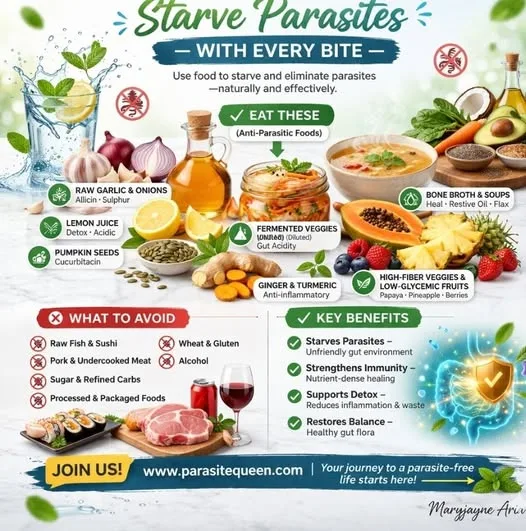
High sugar intake
Diets rich in processed foods
Disruption of the gut microbiome
Chronic inflammation
Nutrient deficiencies
Weakened immune responses
When beneficial bacteria decline and immune defenses are compromised, parasites may find it easier to survive.
Parasites Reproduce Inside the Host
Another point often misunderstood is how parasites multiply. While parasites are typically introduced into the body through contaminated food, water, soil, animals, or insect vectors, many species reproduce once they establish themselves in a host.
Some parasites lay eggs that are passed through the digestive system. Others release larvae that continue the life cycle within the body. In some cases, reinfection cycles can occur internally.
This can give the impression that parasites are “born” inside the body, but the initial introduction usually comes from an external source.
Supporting the Body’s Defenses
Rather than focusing only on altering pH levels, many experts emphasize strengthening the body’s natural defenses.
Supporting a healthy internal environment may include:
Reducing refined sugars and processed foods
Maintaining a balanced gut microbiome
Eating nutrient dense whole foods
Supporting digestive health
Strengthening immune function
When the internal terrain is balanced, the body becomes less hospitable to opportunistic organisms.
The Bottom Line
The idea that parasites cannot survive in an acidic environment is largely a myth. While stomach acid provides an important protective barrier, some parasites can survive it and continue their life cycle in other parts of the digestive tract.
Parasites are highly adaptable organisms that thrive when the body’s internal terrain becomes weakened or imbalanced.
Understanding how parasites interact with the body’s environment helps move the conversation beyond myths and toward a more complete understanding of prevention and health.
DO YOU HAVE A QUESTION REGARDING PARASITES? Join us for more parasite insites
Written by Maryjayne Aria , author of the book Immune Health, Terrain & GcMAF
Knowledge empowers people to make better choices.
FEEL FREE TO FOLLOW ME
SHARE FROM MY PERSONAL PAGE
SHARE THIS POST