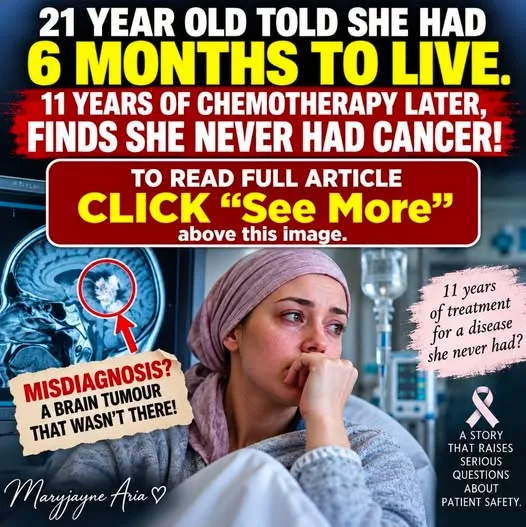
Imagine being 21 years old, suffering from severe migraines, and going to hospital expecting answers. Instead, you are told you have an aggressive brain tumour. You are told you may have only six to 12 months to live. You are told you may never have children. Your entire future disappears in a single conversation. That is the devastating story of Becky Jones, who was diagnosed with a grade four glioblastoma brain tumour in 2012. She says she was subsequently subjected to years of repeayed chemotherapy and radiotherapy, believing she was fighting a deadly cancer. But more than a decade later, specialists discovered that she never had a glioblastoma at all.
The question now is horrifying: How could a young woman allegedly spend 11 years being treated for cancer she never had and have taken copious amounts of chemotherapy, which is known the most toxic drug on the market?
FROM SEVERE MIGRAINES TO A TERMINAL CANCER DIAGNOSIS. Becky's ordeal began when she experienced severe migraines. At the time, she was working as a CCTV operator at Coventry City's football stadium in England. She sought medical attention, and a brain scan reportedly revealed a mass. A biopsy was arranged, but according to reports, the results were lost. Becky was then transferred to University Hospitals Coventry and Warwickshire, where she says she was diagnosed with a grade four glioblastoma. She was just 21 years of age. According to her account, doctors told her that she had between six and 12 months to live and that she would never be able to have children. For a young woman who had gone to hospital because of headaches, the news must have been shattering. Her life, her ambitions and her hopes for the future were suddenly overshadowed by a diagnosis she believed would kill her. But this was only the beginning.
11 YEARS OF CHEMOTHERAPY: THE TREATMENT SHE BELIEVED WAS SAVING HER LIFE. Becky says she underwent radiotherapy and continued taking the chemotherapy drug temozolomide, commonly known as TMZ. She claims she was told that she needed to continue chemotherapy for the rest of her life.
For 11 years, she reportedly lived with the belief that stopping treatment could mean death. Think about that for a moment. Every tablet. Every appointment. Every scan. Every moment of feeling unwell. Every time she worried about the future and if she had a future. She believed she was fighting cancer. She believed the treatment was keeping her alive. She believed that if she stopped, the tumour could return or kill her.
But according to reports, specialists later concluded that she had not had a glioblastoma at all. A young woman who believed she was a terminal cancer patient now claims she was subjected to years of gruelling treatment for the wrong disease.
THE HORROR OF BEING TOLD YOU ARE DYING. A cancer diagnosis is not simply a medical label. It's a sentence that controls every aspect of a person's life. When someone is told they have a terminal brain tumour, they may begin to think about death long before death is actually near. They may worry about their family, their partner, their children and everything they will leave behind. Becky says she was told she would never have children.
These detail makes her story particularly heartbreaking. Chemotherapy takes away quality of life. It depletes your immune system. Becky states in interviews that the 11 years were spent undergoing treatment were filled with fear and so much mental and physical suffering.
According to reports, she described chemotherapy as horrendous and said it affected her ability to work, attend family events and enjoy life as she once did, she had little quality of life. She had previously enjoyed going to the gym, running and going out for meals with her partner. She had a good quality of life untill it was stripped away from her, she had very little strength. And all the while, she believed she had a deadly brain tumour.
THE DIAGNOSIS THAT WAS WRONG. The shocking development came after Becky's original consultant retired. In 2024, she says she received a phone call informing her that her treatment was stopping because Professor Ian Brown had retired.
Reports say that in 2025, specialists reviewed her case and concluded that she had not had a glioblastoma. Instead, she was reportedly diagnosed with tumefactive demyelination, a form of brain inflammation that can produce a mass-like lesion and resemble a brain tumour. This is a crucial medical distinction. A mass seen on a brain scan does not automatically mean cancer. There are many other reasons. Some inflammatory conditions can create lesions that look similar to tumours. Tumefactive demyelination is one example, and it can present a significant diagnostic challenge. The correct diagnosis matters because the treatment for inflammation is not the same as the treatment for cancer. It is NOT chemotherapy or radiation. Her actual condition could have been treated with steroids or other less harmful drugs, rather than being subject years of chemotherapy.
HOW CAN A BRAIN TUMOUR BE CONFUSED WITH INFLAMMATION? The brain is one of the most complex organs in the human body. Diagnosing abnormalities within it can be challenging, particularly when a lesion resembles a tumour. Tumefactive demyelination occurs when inflammation damages myelin, the protective covering surrounding nerve fibres. The resulting lesion can become large enough to appear tumour-like on MRI scans. Depending on its location, it may cause headaches, weakness, changes in sensation, seizures, visual disturbances or other neurological symptoms. Parasites are often missdiognosed for cancer tumors for this same reason. The problem is that some of these symptoms can also occur with brain tumours. Dionosis of cancer is not often questioned. This is why doctors must consider the full clinical picture instead of guess work. MRI findings, symptoms, laboratory tests, specialist neurological assessment and, when appropriate, tissue examination may all contribute to diagnosis. A brain lesion is NOT automatically proof of cancer.
The correct diagnosis requires evidence.
In Becky's case, reports raise many questions the diagnosis she received and whether alternative explanations were considered. Those questions are now central to the legal and medical investigations. No amount of money can give Becky back 11 years and remove the trauma. The emotional side can be worse than the diognosis. Her family would have sufferered also, yet they will not be considered for any form of compensation.
But the big question remains: If the original biopsy results were lost, how was the diagnosis confirmed? Was the diagnosis based on imaging? Was tissue reviewed by a specialist neuropathologist? Were alternative diagnoses considered? Was there a reason to believe that the lesion was a glioblastoma rather than an inflammatory condition? Was it guess work? These are not minor questions. They go to the heart of whether the treatment was appropriate.
WHY WAS SHE GIVEN CHEMOTHERAPY FOR 11 YEARS? Temozolomide is a chemotherapy drug used in the treatment of certain brain tumours, including glioblastoma. It is a serious medication with high toxicity and severe side effects that include death, and its use is normally based on a specific diagnosis and treatment plan. Becky says she was told she needed chemotherapy for the rest of her life. That is one of the most alarming aspects of the case. Cancer treatment is not something that should continue indefinitely without appropriate clinical justification. Treatment plans are normally reviewed in light of diagnosis, response, side effects and the patient's individual circumstances.
The Royal College of Physicians has reportedly reviewed cases involving patients treated under the supervision of Professor Ian Brown. News reports say the review raised concerns about prolonged temozolomide treatment and whether some patients received treatment without sufficient evidence of benefit. The review is important because it may help establish whether failures occurred in diagnosis, treatment planning, clinical oversight or monitoring.
THE PHYSICAL COST OF TREATMENT SHE SAYS SHE DID NOT NEED. Chemotherapy is designed to target cancer cells, but it can also affect healthy cells. Temozolomide can cause side effects including nausea, vomiting, fatigue, hair loss reduced blood cell counts and increased susceptibility to infection and even death. Becky suffered greatly during her 11 year ordeal. Becky says she experienced the physical and emotional consequences of treatment for years.
THE PSYCHOLOGICAL DAMAGE MAY LAST A LIFETIME. The physical effects of chemotherapy are only one part of the story. Imagine being told at 21 that you are going to die. Imagine planning your life around a terminal diagnosis. Imagine believing that every day could be one of your last.
Then imagine discovering years later that you may never have had the cancer in the first place. The psychological impact of such an experience are profound. How can she trust again? Becky says she lived under the shadow of a terminal diagnosis for 11 years. Anger. Grief. Confusion. Loss of trust. A person may question every medical appointment, every treatment decision and every year that has passed.
Even when a diagnosis is corrected, the experience of believing you are dying cannot simply be erased.
SHE IS NOT THE ONLY PATIENT RAISING QUESTIONS. Becky's case has reportedly become part of wider legal action. According to news reports, more than 40 patients are taking legal action against University Hospitals Coventry and Warwickshire NHS Trust in connection with concerns about prolonged chemotherapy treatment. The patients were reportedly treated under the supervision of Professor Ian Brown, who has since retired. The General Medical Council is also reported to be investigating him.
The investigations will need to establish whether there were failures in diagnosis, treatment or clinical oversight, and whether those failures caused harm. For the patients involved, the legal process may be the only route to obtaining answers about what happened to them.
HOW MANY PEOPLE COULD HAVE BEEN AFFECTED? This is one of the questions that makes the case so important. It raises concerns about how diagnoses were made, how chemotherapy was prescribed, how treatment was reviewed and whether patients were given appropriate opportunities for second opinions.
The reported review of more than 40 patients is therefore significant. What matters is whether the healthcare system had appropriate safeguards in place to identify diagnostic uncertainty, review long-term treatment and respond to patient concerns.
THE IMPORTANCE OF A SECOND MEDICAL OPINION. Becky's story raises a question that many patients may find uncomfortable: Should you seek a second or 3rd opinion when you receive a serious diagnosis? A second and 3rd opinion can be valuable when a diagnosis is unusual, the treatment is prolonged, the evidence is unclear or the patient has continuing concerns.
It means that another qualified specialist may sometimes identify information that was missed or interpret the evidence differently. For a suspected brain tumour, other opinions may involve reviewing MRI scans, pathology slides, biopsy findings and the treatment plan. Depending on the case, specialists such as neurologists, neurosurgeons, neuro-oncologists and neuropathologists may be involved.
Patients should feel able to ask:
What exactly has been found on my scan?
Has the diagnosis been confirmed by pathology? What other conditions could cause similar findings? What is the purpose of this treatment? How long is treatment expected to continue? What are the risks and side effects? What happens if the treatment does not work? What is the toxicity of the treatment. Would a second or 3rd specialist opinion be appropriate? These questions are especially important when treatment is prolonged or carries significant risks.
A DIAGNOSIS SHOULD NOT BE A LIFE SENTENCE WITHOUT EVIDENCE
Medical diagnosis is not always a one-time event, Neither is it always correct.
Conditions can evolve. New information can emerge. Symptoms may change. Scan findings may need reassessment.
A diagnosis made years earlier should be reviewed if the clinical picture no longer fits. In cancer care, ongoing monitoring is an important part of treatment. Doctors assess scans, symptoms, blood tests and other findings to determine how a patient is responding.
Don't be afraid to ask questions. Reports say Becky questioned her diagnosis at the time but was reportedly told that the growth would not be visible to the naked eye. But the wider lesson is clear: A diagnosis should be supported by real evidence, and treatment should be reviewed in light of new information.
WHEN THE HEALTHCARE SYSTEM FAILS, WHO PROTECTS THE PATIENT? Patients place enormous trust in doctors. They trust medical professionals to interpret symptoms, examine test results and recommend treatment that is appropriate for their condition. They trust hospitals to maintain accurate records. They trust healthcare systems to investigate concerns. May be this is too much trust!
And when the treatment involves chemotherapy, surgery or other high-risk interventions, that trust becomes even more important. Most patients do not have the medical knowledge to independently assess every decision.
They rely on the healthcare system to protect them. If a patient later discovers that their diagnosis may have been wrong, that trust can be shattered.
They may question not only the original diagnosis but every decision made. No patient should have to spend years undergoing treatment they did not need.
No family should have to live under the shadow of a terminal diagnosis without confidence that the diagnosis is accurate.
Becky's legal action against the NHS may help establish what happened and whether anyone should be held accountable. Her story is a reminder of the importance of accurate diagnosis, independent review and patient safety. A diagnosis can change a life. An incorrect diagnosis can change it in ways that may never be fully recovered.
Please share this information without making any changes to help increase awareness Copyright Maryjayne Aria author of Immume Health, Terrain and GcMaf