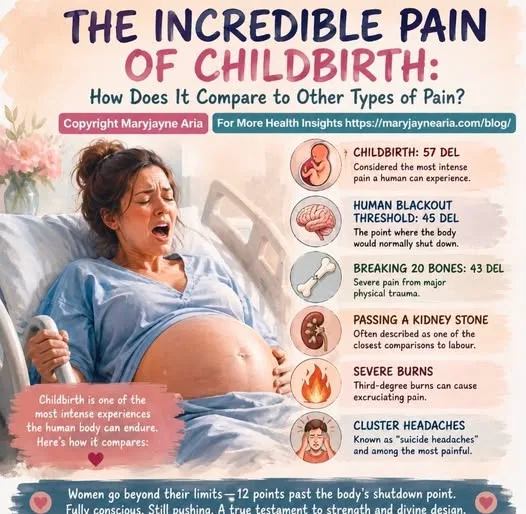
Childbirth is often described as one of the most intense forms of pain a person can experience. Every labour is different, with some women experiencing relatively manageable discomfort while others endure prolonged and extremely painful contractions. Despite the pain, millions of women give birth safely every year, demonstrating the remarkable ability of the human body to adapt during labour.
One of the challenges in comparing childbirth pain is that pain is highly personal. There is no scientific unit called the "Del" that is used in modern medicine to measure pain, despite many viral social media posts claiming otherwise. Doctors typically rely on pain scales, where patients rate their pain from 0 to 10, because everyone's experience is unique.
How does childbirth compare with other painful conditions?
Many women who have experienced both childbirth and other severe medical conditions often compare labour to or even beyond the following:
• Passing a large kidney stone. Frequently described as one of the closest comparisons to labour pain.
• Severe burns. Third-degree burns can cause excruciating pain before nerve damage occurs.
• Cluster headaches. Sometimes called "suicide headaches," these are considered among the most painful neurological conditions.
• Trigeminal neuralgia. Often referred to as one of the worst pains known in medicine due to intense facial nerve pain.
• Multiple bone fractures. Breaking several bones at once causes severe trauma, although childbirth differs because contractions repeatedly build and ease over many hours.
Unlike sudden injuries, labour pain comes in powerful waves. During contractions, the muscles of the uterus tighten with tremendous force while the cervix gradually opens to allow the baby to pass through the birth canal. As labour progresses, the pressure on the pelvis, bladder, back, and surrounding nerves increases, making contractions more intense.
Fortunately, the body has built-in ways of helping mothers cope. During labour, hormones such as endorphins, oxytocin, and adrenaline are released. Endorphins act as natural pain relievers, while oxytocin helps coordinate contractions and encourages bonding between mother and baby after birth.
Pain during labour also serves a biological purpose. Each contraction helps move the baby lower into the birth canal and gradually dilates the cervix. Although extremely uncomfortable, the pain is part of the natural process that leads to delivery.
Modern medicine also offers several options to help manage labour pain, including breathing techniques, movement, water immersion, gas and air, opioid medications, epidural anaesthesia, and continuous support from trained birth partners or midwives.
Every birth experience is unique. Some women have rapid labours, while others labour for many hours. Some choose natural childbirth, while others prefer pain relief. There is no right or wrong way to give birth, and every mother's experience deserves respect.