Cancer cases are influenced by several overlapping factors. One major driver is population growth and ageing. As people live longer, the likelihood of developing cancer naturally increases, because cancer is primarily a disease associated with accumulated cellular damage over time. So in many countries, part of the rise in cases reflects demographics rather than a sudden change in disease biology.
Another important factor is improved detection. Screening programs, better imaging technology, and more routine testing mean cancers are being found earlier and more often than in previous decades. This can create the impression of a sharp increase, even when part of the rise is due to earlier identification of cases that might once have gone unnoticed.
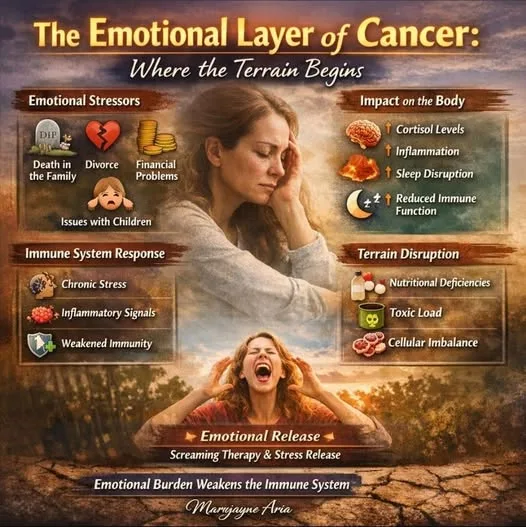
Lifestyle and environmental factors also play a role. Diet, physical activity levels, chronic stress, exposure to certain chemicals, alcohol use, smoking rates, and metabolic health all influence long term cancer risk. However, these factors vary widely across regions and populations, which is why cancer trends are not uniform worldwide.
What is often missed in mainstream discussion is the concept of terrain health, the internal biological environment in which disease either struggles or thrives. This is explored in depth in the cancer chapter of my book Immune Health, Terrain & GcMAF, where cancer is discussed not only as a genetic event, but also as a condition influenced by immune surveillance, inflammation balance, microbial load, and cellular communication within the body.
From this perspective, GcMAF is often discussed within terrain based research as a modulator of immune system signaling, particularly in relation to macrophage activation. In preventative care discussions, the interest lies in how immune readiness and cellular communication may support the body’s natural surveillance systems. Within a terrain framework, this is considered one of several biological layers that influence how the body maintains internal balance over time. Like all other products and treatments It is not presented as a standalone solution, but as part of a broader systems approach to immune resilience and terrain integrity. Unlike many other treatments GcMaf has a safety profile of ZERO toxicty, this matters.
This is why modern health discussions are increasingly moving toward multi layer thinking. Cancer is not a single condition with a single cause. It is a group of diseases with many contributing factors, and outcomes are increasingly improving in many cancer types due to advances in early detection and treatment. At the same time, there is growing interest in how immune function, chronic inflammation, and terrain health may play a preventative role in overall disease susceptibility.
The “one person every 80 seconds” type of statistic is typically used to illustrate frequency at a population level rather than to describe an individual risk in real time. While it reflects a serious global health burden, it can also be misleading when taken out of context. It was confirmed that one in two people alive today in the western world will have cancer at some point in thier lives 6 years ago, cancer rates are increasing.
Public health discussions benefit most when statistics are paired with context, because raw numbers alone can easily create fear without clarity, and clarity is what allows people to make informed decisions about long term health.
Written for information only. The article is not medical advice.
Written by Maryjayne Aria
Author of Immune Health, Terrain & GcMAF
For more insights into health and disease patterns, visit www.gcmaf.com