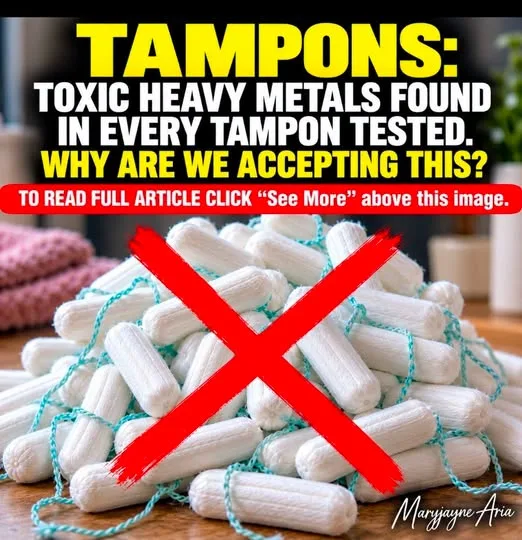
A study from researchers at the University of California, Berkeley, published in Environment International, found measurable concentrations of metals in every tampon tested. The researchers examined 30 tampons from 14 brands and tested for 16 different metals. Lead, arsenic and cadmium were among the metals detected. For me, this is deeply concerning because these are products specifically designed to sit inside the female body for hours at a time, repeatedly, month after month and potentially for decades. This should concern you.
EVERY TAMPON TESTED CONTAINED METALS: The study detected all 16 metals examined. Lead was found in every sample, with higher concentrations in non-organic products, while arsenic was more prevalent in organic products. This immediately challenges the assumption that choosing an organic tampon automatically means choosing a product free from potentially harmful contaminants.
I BELIEVE THESE METALS ARE ABSORBED: The vagina contains highly vascularised mucosal tissue, and substances placed against this tissue can enter the body. I do not believe we should pretend that toxic metals simply sit harmlessly inside a tampon without interacting with the body. When a product containing lead, arsenic or cadmium is placed directly against internal tissue, I believe absorption is a genuine route of exposure and should be treated seriously.
ZERO HEAVY METALS IS MY STANDARD: Personally, I believe there should be zero toxic heavy metals in products designed to be placed inside the body. I do not accept the idea that we should determine how much contamination a woman can tolerate and then call that amount safe. If a substance is unnecessary and toxic, why should it be there at all?
LEAD HAS NO SAFE LEVEL: Lead is particularly concerning because there is no known safe level of lead exposure. Yet lead was detected in every tampon tested in the Berkeley study. To me, that should be enough to demand much greater scrutiny of how these products are manufactured, what materials are used and why contamination is occurring. It should also be enough for women to STOP. using them.
ORGANIC DOES NOT MEAN CLEAN: One of the most interesting findings was that arsenic concentrations were higher in organic tampons. This demonstrates why I do not trust labels such as organic, natural or chemical-free. A product can carry a reassuring label while still containing substances that I personally would not want anywhere near my body.
WHY DOES THE VAGINAL ROUTE MATTER? The vagina is not simply external skin. It is living mucosal tissue with a rich blood supply. Products placed there have direct contact with this tissue for prolonged periods. I believe this makes the presence of toxic metals far more concerning than finding the same trace contaminants in an ordinary external-use product.
AND THEN THERE IS THE FDA: The FDA subsequently carried out its own investigation into metals in tampons and concluded that the amount released under its testing conditions was very low and did not present a toxicological concern. This is where I strongly disagree with the level of trust consumers are expected to place in regulatory conclusions.
I DO NOT CONSIDER THE FDA AN INDEPENDENT SOURCE: I personally do not regard the FDA as an independent source of information. It is a regulatory authority responsible for overseeing the products it regulates. I believe consumers should question regulatory conclusions rather than automatically accepting them as the final word. Independent research, independent laboratories and independent replication are essential when the issue concerns products used internally by millions of women.
WHO IS TESTING THE PRODUCTS? The question should not simply be whether a regulator considers the exposure acceptable. We should be asking what was tested, how it was tested, for how long, under what conditions and whether the findings have been independently replicated. I want to see genuinely independent testing that measures what happens when these products are used inside the body under real-world conditions.
WHAT ABOUT YEARS OF USE? Women may use tampons for many years. They may use them several days every month from adolescence through their forties or fifties. That represents repeated exposure over a significant portion of a woman's lifetime. I believe cumulative exposure deserves far more attention than simply looking at one isolated period of use.
WHY ARE THESE METALS THERE? This is perhaps the question that bothers me most. If lead, arsenic and other heavy metals are not intentionally added to tampons, why are they present? Are they coming from the raw materials? The manufacturing process? Environmental contamination? Processing equipment? The source matters because consumers deserve to know how these substances are entering products designed for internal use.
WOMEN DESERVE TRANSPARENCY: I believe women have the right to know exactly what is contained in products they put inside their bodies. We should not have to rely on marketing language, reassuring packaging or regulatory statements. We should have access to transparent testing and full information about materials and contaminants.
THIS IS NOT ABOUT FEAR: It is about asking questions. It is about refusing to accept exposure as normal. It is about recognising that something can be legally permitted and still deserve further scientific investigation. I believe the standard should be higher when a product is placed directly inside the body.
MY POSITION IS SIMPLE: I believe toxic heavy metals can be absorbed. I believe repeated exposure matters. I believe zero unnecessary heavy-metal contamination should be the goal. And I believe the FDA should not be treated as the final authority on questions of human safety simply because it is a government regulator.
The Berkeley study has opened a door that should not be closed. If toxic metals are being detected in products used internally by millions of women, I believe we should be demanding better answers, more independent testing and products manufactured to the highest possible standard.
The question is no longer simply, "Is the amount considered safe?" My question is, "Why are toxic heavy metals there at all?"
I have also been looking into period panties, and I have to say, I am not as convinced by the "safer and healthier" marketing as I once might have been. Research has found PFAS, the so-called "forever chemicals", in period underwear. Other studies have also detected chemicals including phthalates, plasticisers, fragrances, volatile organic compounds and other substances used in synthetic fabrics and manufacturing. Some period underwear is also treated with antimicrobial substances such as silver or copper. What concerns me is where these chemicals are located. We are talking about products worn directly against intimate genital tissue for hours at a time, repeatedly, month after month and potentially for many years. I personally believe women should be asking much more about what is actually in these products. I don't want unnecessary PFAS, plasticisers, fragrances, antimicrobial chemicals or other contaminants sitting against my body for hours. Just because a chemical is permitted in a product does not mean I personally want prolonged exposure to it. And this is exactly why I think we need much greater transparency. "Organic", "natural", "eco-friendly" or "period underwear" does not automatically mean chemical-free.
SUGGESTED SAFER METHODS: Safest methods seem to be: Menstrual cup made from high-quality medical-grade silicone and second is
Menstrual disc made from a well-characterized medical-grade silicone or TPE. The reason I would put a menstrual cup or disc first is that it can avoid many of the absorbent fibres, fragrances, adhesives and other materials found in disposable products. However, "reusable" does not automatically mean chemical-free. A 2025 study detected plastic additives including phthalates, organophosphate esters and alternative plasticisers across both disposable and reusable menstrual products, including some menstrual cups.
Please share this information to help increase awareness without making any changes. Copyright Maryjayne Aria , author of Immune Health, Terrain and GcMAF.