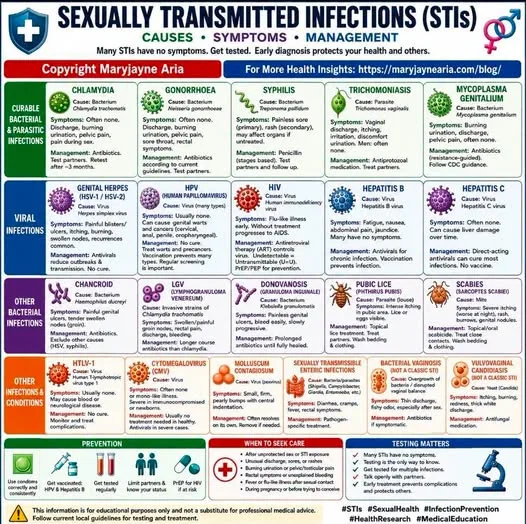
Sexually transmitted infections, commonly called STIs, are infections caused by bacteria, viruses and parasites that can be transmitted predominantly through sexual contact. More than 30 pathogens are known to be sexually transmissible. Transmission can occur through vaginal, anal or oral sex, genital skin-to-skin contact, and, for some infections, through blood exposure or from mother to baby during pregnancy or childbirth.
One of the most important facts about STIs is that the absence of symptoms does not mean the absence of infection. Many STIs are completely asymptomatic, particularly infections of the throat, rectum and cervix. A person can therefore acquire an infection, transmit it to another person and develop complications without ever knowing they were infected.
THE MAJOR CURABLE STIs: Chlamydia, gonorrhoea, syphilis and trichomoniasis are the four major globally recognised curable STIs. Appropriate antimicrobial treatment can eliminate these infections, although reinfection can occur if a partner remains untreated or a person is exposed again.
CHLAMYDIA: Cause: Chlamydia is caused by the bacterium Chlamydia trachomatis. It is primarily transmitted through vaginal, anal and oral sex. Symptoms: Most infections produce no symptoms. When symptoms occur, they can include abnormal vaginal or penile discharge, burning during urination, pelvic or lower abdominal pain, pain during sex, testicular pain or rectal symptoms. Throat infection may be asymptomatic. Complications: Untreated infection can cause pelvic inflammatory disease, ectopic pregnancy, infertility and chronic reproductive complications. Management: Diagnosis generally uses a nucleic acid amplification test, or NAAT, from urine or a genital, rectal or pharyngeal specimen depending on exposure. Treatment is with appropriate antibiotics selected according to current clinical guidelines, pregnancy status, site of infection and individual circumstances. Sexual partners may also require evaluation and treatment, and repeat testing is often recommended after treatment because reinfection is common.
GONORRHOEA: Cause: Gonorrhoea is caused by Neisseria gonorrhoeae. It can infect the cervix, urethra, rectum and throat and can also infect the eyes. Symptoms: Some people have no symptoms. Possible symptoms include thick or purulent genital discharge, burning urination, pelvic pain, testicular pain, rectal discharge or discomfort, sore throat or conjunctivitis. Complications: Untreated infection can cause pelvic inflammatory disease, infertility, epididymitis and disseminated gonococcal infection. Gonorrhoea can also be transmitted to newborns during childbirth. Management: NAAT is widely used for diagnosis, with culture particularly important in suspected treatment failure and for antimicrobial susceptibility testing. Treatment must follow current local guidelines because antimicrobial resistance is an increasingly serious problem. WHO identifies drug-resistant gonorrhoea as a major threat to STI control.
SYPHILIS: Cause: Syphilis is caused by the bacterium Treponema pallidum. Symptoms: Syphilis progresses through stages. Primary syphilis commonly causes a painless ulcer at the site of infection. Secondary syphilis can produce a widespread rash, including the palms and soles, together with lymph-node enlargement and other systemic symptoms. Latent infection may produce no symptoms. Untreated infection can eventually involve the nervous system, eyes, cardiovascular system and other organs. Congenital syphilis can occur when infection is transmitted during pregnancy. Management: Diagnosis generally involves blood tests, with additional testing in selected cases. Penicillin remains the standard treatment, with the regimen determined by disease stage and clinical circumstances. Pregnancy requires particular attention because effective treatment can prevent serious fetal and neonatal complications. Sexual partners should be evaluated according to exposure and stage of infection.
TRICHOMONIASIS: Cause: Trichomoniasis is caused by the protozoan parasite Trichomonas vaginalis. Symptoms: Many infections are asymptomatic. When symptoms occur, women may experience vaginal discharge, genital irritation, itching, redness, unpleasant odour and discomfort during intercourse or urination. Men may develop urethral irritation or discharge, although infection is frequently asymptomatic. Management: Diagnosis can involve molecular testing, antigen testing or microscopy depending on availability. Treatment uses an appropriate nitroimidazole medication. Sexual partners require evaluation and treatment to reduce reinfection.
MYCOPLASMA GENITALIUM: Cause: Mycoplasma genitalium is a bacterium associated particularly with urethritis and cervicitis. Symptoms: Infection may cause burning urination, urethral discharge, vaginal or cervical symptoms, pelvic discomfort or abnormal bleeding, but many infections are asymptomatic. It is particularly important in persistent or recurrent urethritis. Complications: In women, infection has been associated with cervicitis, pelvic inflammatory disease and reproductive complications. Management: NAAT is used for diagnosis. Resistance is an important issue, particularly resistance to macrolides. Current CDC guidance recommends resistance-guided therapy where available and a two-stage approach rather than simply using a single dose of azithromycin.
LYMPHOGRANULOMA VENEREUM, OR LGV: Cause: LGV is caused by specific invasive strains of Chlamydia trachomatis. Symptoms: The initial lesion may be small and easily missed. Later disease can cause painful swollen lymph nodes, particularly in the groin, or anorectal inflammation with rectal pain, discharge, bleeding and tenesmus. Management: Diagnosis combines clinical assessment with chlamydia testing and, where available, molecular typing. Treatment requires a longer antibiotic course than uncomplicated chlamydia. Current guidelines should be followed because treatment depends on the clinical presentation.
CHANCROID: Cause: Chancroid is caused by Haemophilus ducreyi and is now uncommon in many countries. Symptoms: It typically produces one or more painful genital ulcers, often accompanied by tender, swollen lymph nodes that can become fluctuant. Management: Diagnosis can be difficult because specialised culture is not widely available and other causes of genital ulcers, particularly herpes and syphilis, must be excluded. Antibiotic treatment can cure the infection.
DONOVANOSIS, OR GRANULOMA INGUINALE: Cause: Donovanosis is caused by Klebsiella granulomatis. Symptoms: It produces slowly progressive, usually painless genital or perineal ulcers that may bleed easily. The lesions can enlarge and destroy surrounding tissue if untreated. Management: Diagnosis is usually clinical plus microscopic identification of Donovan bodies when available. Prolonged antibiotic therapy is required, with treatment continued until lesions have completely healed. Because the disease can resemble other genital-ulcer conditions, laboratory evaluation is important.
GENITAL HERPES: Cause: Genital herpes is caused by herpes simplex virus type 1 or type 2. HSV-2 is responsible for many recurrent genital infections, while HSV-1 is increasingly recognised as a cause of genital herpes. Symptoms: Painful blisters or ulcers, burning, itching, genital pain and sometimes fever or swollen lymph nodes can occur during a first episode. Many people have mild or unrecognised infection. Recurrences can occur, particularly with HSV-2. Management: There is currently no cure that removes latent HSV from the body. Antiviral medicines such as acyclovir, valacyclovir and famciclovir can shorten episodes, reduce recurrences and, with suppressive therapy, reduce transmission risk. Avoiding sexual contact during active lesions and using barrier protection can further reduce transmission.
HUMAN PAPILLOMAVIRUS, OR HPV: Cause: HPV is a large family of viruses transmitted primarily through intimate skin-to-skin sexual contact. Symptoms: Most HPV infections produce no symptoms and many are cleared or suppressed by the immune system. Some types cause genital warts, while persistent infection with high-risk HPV types can cause cellular changes and cancers. HPV is associated with cervical, anal, penile, vulvar, vaginal and some oropharyngeal cancers. Management: There is no medication that directly eradicates an established HPV infection. Management focuses on monitoring and treating HPV-related lesions and precancerous changes. Genital warts can be treated with several methods, although treatment does not necessarily eliminate the underlying virus. HPV vaccination is an important preventive measure.
HIV: Cause: Human immunodeficiency virus attacks the immune system. It is transmitted through infected blood, semen, vaginal fluids and breast milk, and can be transmitted sexually or through other blood exposures. Symptoms: Acute HIV infection can resemble influenza, producing fever, rash, sore throat, swollen lymph nodes and fatigue, although some people have no obvious symptoms. Without treatment, progressive immune damage can eventually lead to AIDS. Management: HIV is diagnosed using laboratory testing and managed with combination antiretroviral therapy. Modern treatment can suppress the virus to an undetectable level, allowing people to live much longer and healthier lives. Sustained viral suppression also prevents sexual transmission. Prevention includes condoms, testing, treatment of HIV, PrEP for people at ongoing risk and PEP after certain recent exposures.
HEPATITIS B: Cause: Hepatitis B virus can be sexually transmitted as well as transmitted through blood and from mother to child. Symptoms: Acute infection may cause fatigue, nausea, abdominal discomfort, dark urine and jaundice, although many infections produce few or no symptoms. Chronic infection can progressively damage the liver and increase the risk of cirrhosis and liver cancer. Management: Blood testing determines infection and immune status. Some people clear acute infection spontaneously, while chronic infection may require long-term monitoring and antiviral treatment. Hepatitis B vaccination provides highly effective prevention.
HEPATITIS C: Cause: Hepatitis C virus is primarily blood-borne. Sexual transmission is less efficient than for hepatitis B or HIV but can occur, particularly in circumstances involving blood exposure. Symptoms: Acute infection is often asymptomatic. Chronic infection can silently damage the liver for years before cirrhosis or liver cancer develops. Management: Modern direct-acting antiviral medicines can cure most hepatitis C infections. Testing generally begins with an antibody test followed by an HCV RNA test when appropriate. There is currently no hepatitis C vaccine.
HUMAN T-LYMPHOTROPIC VIRUS TYPE 1, OR HTLV-1: Cause: HTLV-1 is a retrovirus transmitted through sexual contact, infected blood and breastfeeding. Symptoms: Most infected people remain asymptomatic. A minority develop serious conditions including adult T-cell leukaemia/lymphoma or HTLV-1-associated myelopathy, a progressive neurological disorder. Management: There is currently no curative antiviral treatment that eliminates HTLV-1. Management involves confirming infection, monitoring for complications and specialist treatment if HTLV-associated disease develops.
CYTOMEGALOVIRUS, OR CMV: Cause: CMV is a very common herpesvirus that can be transmitted through sexual contact, saliva, blood and other body fluids. Symptoms: Healthy adults frequently have no symptoms or may experience a mononucleosis-like illness. Severe disease can occur in people with significant immune suppression. Congenital infection can also cause serious complications in newborns. Management: Most healthy people do not require specific treatment. Antiviral therapy may be used for severe CMV disease, particularly in immunocompromised patients.
MOLLUSCUM CONTAGIOSUM: Cause: Molluscum contagiosum is caused by a poxvirus. In adults, lesions around the genitals can be acquired through sexual skin-to-skin contact. Symptoms: Small, firm, pearly bumps with a central indentation are characteristic. They may occur around the genitals, abdomen, thighs or other areas. Management: Many infections resolve spontaneously. Treatment may be considered when lesions are extensive, persistent, cosmetically concerning or associated with transmission risk. Sexual transmission should be considered when genital lesions occur in adults.
PUBIC LICE: Cause: Pubic lice, or Pthirus pubis, are parasitic insects usually spread through close sexual or intimate contact. Symptoms: Intense itching in the pubic region is characteristic. Small lice or eggs may be visible on pubic hair. Management: Treatment involves an appropriate topical pediculicide, treatment of close sexual contacts when indicated, washing or isolating clothing and bedding, and avoiding sexual contact until treatment has been completed.
SCABIES: Cause: Scabies is caused by the mite Sarcoptes scabiei. It can be transmitted sexually because prolonged skin-to-skin contact facilitates transmission, although sexual contact is not required. Symptoms: Severe itching, often worse at night, with a characteristic rash and burrows. Genital nodules may occur. Management: Treatment requires an appropriate scabicide such as permethrin or another recommended therapy, together with simultaneous management of close contacts and environmental measures. Because scabies is not exclusively sexually transmitted, it is more accurate to describe it as a sexually transmissible infestation rather than a conventional STI.
SEXUALLY TRANSMISSIBLE ENTERIC INFECTIONS: Several intestinal pathogens can be transmitted during sexual activity, particularly activities involving oral-anal or anal contact. These include Shigella, Campylobacter, Giardia and Entamoeba histolytica. Symptoms may include diarrhoea, abdominal cramps, fever, nausea, blood or mucus in stool and rectal symptoms. Management depends on the organism, severity and antimicrobial susceptibility. Laboratory stool testing is important because treatment differs substantially between pathogens. WHO also recognises emerging outbreaks involving sexually transmissible infections such as Shigella sonnei.
MPox: Cause: Mpox is caused by monkeypox virus, an orthopoxvirus. Transmission can occur through close skin-to-skin contact, including sexual contact, contact with lesions or contaminated materials. Symptoms: Fever, swollen lymph nodes, fatigue and characteristic lesions or pustules can occur, although presentation varies. Lesions may occur around the genitals, anus, mouth or other body areas. Management: Most cases are managed with supportive care and pain control, while people with severe disease or high risk of complications may require specialist antiviral treatment. Vaccination can help prevent infection in appropriate populations.
BACTERIAL VAGINOSIS: Cause: Bacterial vaginosis results from disruption of the normal vaginal microbial ecosystem rather than a single sexually transmitted pathogen. Sexual activity can influence risk, but BV is not classified as a conventional STI. Symptoms: Thin vaginal discharge, strong or fish-like odour, particularly after sex, and changes in vaginal pH are common. Some people have no symptoms. Management: Symptomatic BV can be treated with appropriate antimicrobial therapy. Recurrent BV can be challenging and requires individualised management.
VULVOVAGINAL CANDIDIASIS: Cause: Candida yeast normally exists in the body and can overgrow under certain circumstances. It is not generally considered an STI, although sexual activity can occasionally contribute to transmission or symptoms. Symptoms: Intense vulvar itching, burning, redness, swelling, pain and thick curd-like discharge are typical. Management: Diagnosis should distinguish Candida from other causes of vaginal symptoms. Treatment uses appropriate antifungal medication, with longer or specialised regimens required for recurrent or complicated infections.
HOW STIs ARE DIAGNOSED: STI diagnosis depends on the organism and the site of infection. Testing may include urine NAAT, vaginal or cervical swabs, urethral swabs, rectal swabs, throat swabs, blood tests, lesion swabs, microscopy, culture and, in selected circumstances, specialised molecular testing. Testing should be based on sexual exposure, symptoms, local epidemiology and individual risk. Throat and rectal infections deserve particular attention because they can be completely asymptomatic. WHO's 2025 guidance specifically emphasises improved screening for asymptomatic chlamydia and gonorrhoea.
WHY TESTING MATTERS EVEN WITHOUT SYMPTOMS: A person may feel completely healthy while carrying chlamydia, gonorrhoea, HPV, HIV, herpes, syphilis or other infections. Screening therefore has an important role in preventing transmission and detecting infections before complications develop. People diagnosed with one STI may also need testing for other infections because coinfections occur.
MANAGEMENT IS MORE THAN TAKING MEDICATION: Effective STI management includes accurate diagnosis, appropriate antimicrobial or antiviral treatment, evaluation and treatment of sexual partners when indicated, abstaining from sexual activity for the period recommended for the specific infection, follow-up testing when required, vaccination where available and prevention counselling. WHO specifically identifies partner services, clinical follow-up, condoms, HIV PrEP and vaccination against hepatitis B and HPV as important components of comprehensive STI care.
ANTIBIOTIC RESISTANCE IS CHANGING STI MANAGEMENT: Gonorrhoea is particularly concerning because resistance has developed against multiple antibiotic classes. Mycoplasma genitalium also has substantial antimicrobial resistance, making laboratory diagnosis and resistance-guided therapy increasingly important. Antibiotics should therefore be selected according to current clinical guidelines rather than using leftover medication or treating an STI based solely on symptoms.
PREVENTION: Prevention combines several strategies rather than relying on a single measure. Correct and consistent condom use reduces transmission of many STIs, although condoms cannot completely protect against infections spread through uncovered skin such as HPV, herpes and some syphilis lesions. HPV and hepatitis B vaccination provide highly effective protection against these infections. Regular testing, limiting exposure to infected partners, HIV PrEP where appropriate, prompt treatment and partner management are also important.
WHEN TO SEEK MEDICAL ASSESSMENT: Medical assessment is appropriate after a known STI exposure, a new sexual partner accompanied by concern about infection, unexplained genital or anal lesions, unusual vaginal or penile discharge, burning during urination, pelvic or testicular pain, unexplained genital bleeding, persistent rectal symptoms, or symptoms following sexual contact. Urgent assessment is particularly important with severe pelvic pain, fever, testicular swelling or severe illness, and during pregnancy when an STI is suspected.
THE BIGGER PICTURE: STIs are not simply short-term genital infections. Depending on the organism, untreated infection can contribute to infertility, pelvic inflammatory disease, pregnancy complications, congenital infection, neurological disease, cardiovascular disease, liver disease, cancer and increased susceptibility to HIV. At the same time, many STIs are preventable, diagnosable and treatable, and several are curable. Early testing and appropriate management can dramatically reduce both individual complications and onward transmission.
IMPORTANT DISTINCTION: "STI" DOES NOT MEAN EVERY INFECTION THAT CAN OCCUR AFTER SEXUAL CONTACT: More than 30 organisms can be sexually transmissible, but not all are classified as conventional STIs. For example, Candida, bacterial vaginosis, scabies and some gastrointestinal infections can be associated with sexual activity without being exclusively sexually transmitted. This distinction matters because finding an organism does not automatically prove that sexual transmission was the source.
FINAL TAKEAWAY: The most important principle is that symptoms alone cannot reliably rule an STI in or out. Laboratory testing, consideration of the anatomical site exposed, appropriate treatment and partner management provide the most reliable approach. Anyone diagnosed with an STI should receive appropriate evaluation for additional infections according to their exposure and risk profile, rather than treating one positive result as the entire picture. Current treatment recommendations can change as antimicrobial resistance and new evidence emerge, so treatment should follow up-to-date national or specialist guidance.
Feel free to share this post without making changes