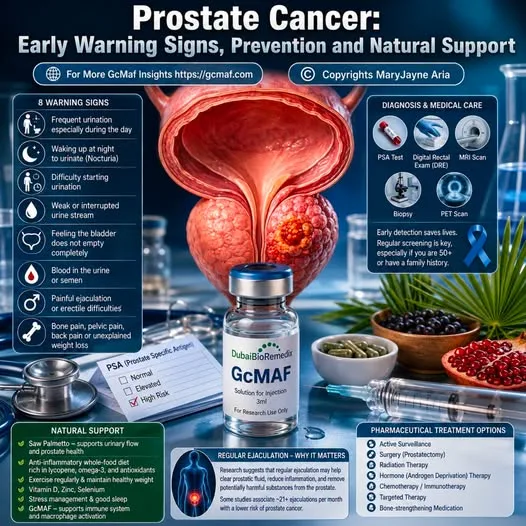
Prostate cancer is one of the most common cancers affecting men worldwide. It often develops slowly and may not cause symptoms in its early stages. However, when symptoms do appear, recognizing them early can lead to earlier diagnosis, more treatment options, and significantly improved outcomes.
It is important to remember that many of these symptoms can also be caused by non-cancerous conditions such as benign prostatic hyperplasia (BPH), prostatitis, urinary tract infections, or bladder disorders. Only proper medical evaluation can determine the underlying cause.
What Is the Prostate?
The prostate is a small walnut-sized gland located below the bladder and surrounding the urethra. Its primary role is to produce fluid that nourishes and transports sperm.
As men age, the prostate commonly enlarges. While enlargement alone is usually not cancer, prostate cancer can also interfere with urinary function because of its location.
Common Warning Signs:
1. Frequent urination Needing to urinate more often, especially during the day, may indicate that the prostate is pressing against the urethra or bladder.
2. Waking frequently during the night to urinate (Nocturia) Repeated nighttime urination is one of the earliest complaints in many men with prostate enlargement. Although often caused by benign enlargement, it should still be assessed.
3. Difficulty starting urination Hesitating before urine begins to flow may indicate narrowing of the urethra caused by prostate enlargement or a tumour.
4. Weak or interrupted urine stream A slow, weak or stop-start urine flow may occur when urine cannot pass freely through the urethra.
5. Feeling the bladder has not emptied completely Many men feel they still need to urinate immediately after finishing because urine remains trapped within the bladder.
6. Blood in the urine or semen Blood should never be ignored. While infection or inflammation may be responsible, prostate cancer is one possible cause requiring prompt medical investigation.
7. Painful ejaculation or erectile difficulties Pain during ejaculation or persistent erectile dysfunction can sometimes occur with prostate disease, although many other conditions can also contribute.
8. Bone pain, pelvic pain, back pain or unexplained weight loss These symptoms may indicate advanced disease and require urgent medical assessment.
Risk Factors:
Several factors increase the likelihood of developing prostate cancer.
• Age over 50 • Family history of prostate cancer • African ancestry • Obesity • Smoking • Diet high in processed foods and saturated fats • Chronic inflammation • Physical inactivity
How Is Prostate Cancer Diagnosed?
Doctors may recommend:
• PSA (Prostate Specific Antigen) blood test • Digital rectal examination (DRE) • MRI scan • Prostate biopsy • PET imaging in selected cases • Genetic testing for some high-risk individuals
Early detection greatly improves treatment success.
Treatment should always be individualized .
Natural Approaches That May Support Prostate Health:
Saw Palmetto:
Saw palmetto is one of the most widely studied herbal supplements for prostate enlargement (BPH). It:
• Support urinary flow • Reduce nighttime urination • Improve bladder emptying • Reduce inflammation within prostate tissue
Anti-inflammatory Diet
A Mediterranean-style diet rich in:
• Colourful vegetables • Berries • Tomatoes (lycopene) • Olive oil • Nuts • Seeds • Legumes • Fatty fish (or plant omega-3 sources)
Helps reduce chronic inflammation and support overall health.
Avoiding processed foods, excessive sugar, refined carbohydrates and processed meats may also be beneficial.
Exercise
Regular physical activity may:
• Improve immune function • Reduce inflammation • Improve hormone balance • Help maintain healthy body weight • Reduce treatment side effects
Aim for at least 150 minutes of moderate exercise each week where appropriate.
Vitamin D:
Maintaining adequate vitamin D levels supports immune function and bone health. Men at risk of deficiency should discuss testing with their healthcare provider.
Zinc and Selenium:
These minerals play important roles in prostate function and antioxidant defence. Excessive supplementation is not recommended unless deficiency exists.
GcMAF:
GcMAF (Gc protein-derived macrophage activating factor) has been investigated for its role in activating macrophages, which are immune cells involved in identifying and removing abnormal cells. Laboratory and early clinical research has explored its effects in immune regulation and cancer.
Does Regular Ejaculation Matter?
Several large observational studies have suggested that men who ejaculate more frequently have a lower risk of developing prostate cancer. One proposed explanation is that regular ejaculation may:
• Help clear prostatic fluid • Reduce the build-up of inflammatory substances • Remove potentially harmful compounds from the prostate • Improve overall prostate function
Some research has found that men reporting approximately 21 or more ejaculations per month had a lower incidence of prostate cancer compared with men reporting fewer ejaculations.
Protecting Your Prostate:
Simple lifestyle habits can make a difference.
• Eat a whole-food, anti-inflammatory diet. • Maintain a healthy weight. • Exercise regularly. • Avoid smoking. • Limit excessive alcohol. • Stay hydrated. • Manage stress. • Discuss PSA screening with your healthcare provider if you are over 50, or earlier if you have a family history. • Seek medical attention promptly if urinary symptoms develop.
Pharmaceutical and Medical Treatment
Treatment depends on the stage and aggressiveness of the cancer.
Options may include:
• Active surveillance for low-risk disease • Surgery (radical prostatectomy) • Radiation therapy • Hormone (androgen deprivation) therapy • Chemotherapy • Immunotherapy for selected patients • Targeted therapies in specific genetic subtypes • Bone-strengthening medications if cancer has spread.
Final Thoughts:
Most urinary symptoms are caused by benign prostate enlargement rather than cancer, but they should never be ignored. Early diagnosis remains one of the most powerful tools in improving survival and preserving quality of life.
Combining regular medical screening with healthy lifestyle habits, appropriate care and supportive nutrition offers the best strategy for maintaining long-term prostate health.
.