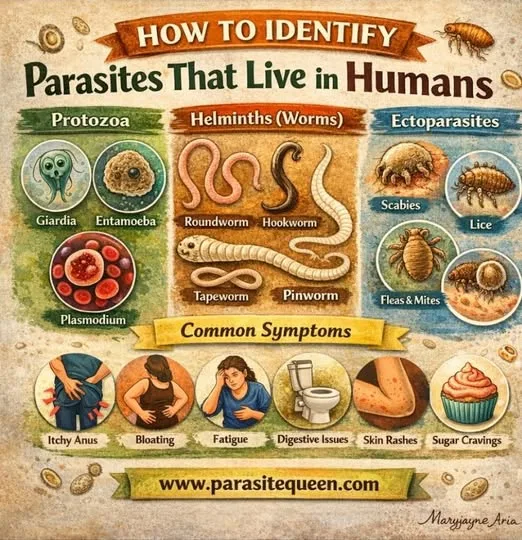
Parasitic infections can alter appetite, digestion, nutrient absorption and host metabolism, there is some evidence showing that intestinal parasites routinely create specific cravings for sugar, chocolate or particular foods.
Parasites can affect appetite: Research has established that parasitic infections can change food intake. Interestingly, the best documented effect is often reduced appetite rather than increased hunger. Parasites can cause inflammation, intestinal dysfunction, nausea, abdominal discomfort, fever, malabsorption and systemic immune responses that suppress normal eating behaviour.
Why would an infection change eating behaviour? Appetite is controlled by a complex network involving the gastrointestinal tract, brain, hormones, cytokines, nutrient availability and neural signalling. Parasitic infections can interfere with several of these systems. Changes in intestinal motility, mucosal function, nutrient absorption and inflammatory signalling may therefore alter hunger and food intake.
Nutrient loss matters: Some intestinal parasites interfere with digestion or absorption and contribute to nutritional losses. This creates a biologically pathway by which nutritional deficiencies or altered energy availability influence appetite. However, a nutritional drive to eat more should not automatically be interpreted as a parasite specifically “demanding” a particular food.
What about sugar cravings?. There are a few small clinical studies stating that there are cravings for sugar or indicates a parasitic infection. Sugar cravings are influenced by many factors, including food reward, dietary restriction, learned associations, sleep, stress, energy balance and the sensory properties of highly palatable foods. Most current reviews of human research do not support the simple idea that sugar behaves like an addictive drug in humans.
Could the gut influence cravings? There is legitimate scientific interest in whether microorganisms living in the gastrointestinal tract can influence eating behaviour. Proposed mechanisms include microbial metabolites, gut hormones, immune signalling, reward pathways and communication between the gut and brain. However, much of the fascinating work in this area concerns the microbiota and experimental models, not proven parasite-induced food cravings in humans.
Parasites versus microbiota: It is important not to combine these two subjects. A hypothesis that gut microorganisms can influence food preference does not prove that helminths or protozoan parasites manipulate people into eating sugar. Parasites are biologically different organisms with different life cycles, host interactions and nutritional requirements.
Some parasites can cause weight changes: Weight loss is a recognised feature of several intestinal parasitic infections. Human tapeworm infections, for example, can cause abdominal symptoms, loss of appetite and weight loss, although many infected people have mild or no symptoms. Other intestinal infections can cause prolonged diarrhoea, malabsorption and nutritional consequences.
Could parasites influence food preference? It is biologically reasonable to investigate. Parasites interact with the host's immune, gastrointestinal and metabolic systems, while appetite itself is regulated through interconnected hormonal and neural pathways. Animal research has demonstrated that parasitic infection can substantially modify feeding behaviour.
Why the sugar-craving theory persists: The theory is attractive because some people with suspected or confirmed intestinal problems report changes in appetite, weight, bloating or cravings. The difficulty is that these symptoms are nonspecific. Stress, sleep disruption, restrictive diets, blood-glucose fluctuations, medications, gastrointestinal disorders and ordinary food-reward mechanisms can all influence cravings.
A craving is not a diagnostic test: A strong craving for sugar, carbohydrates, meat, salt or another food cannot establish the presence of a parasite. Diagnosis should instead be based on appropriate clinical assessment, exposure history and validated laboratory testing when infection is suspected.
The more interesting scientific question: Rather than asking whether “parasites make you crave sugar,” a better research question is whether particular parasitic infections can modify host appetite through measurable changes in inflammation, gastrointestinal hormones, nutrient status, metabolism or gut-brain signalling. This is a much more scientifically testable hypothesis.
What is actually known? Parasites can alter appetite and food intake. They can affect intestinal physiology, digestion, absorption and nutritional status. Host immune and metabolic responses can influence eating behaviour. What has not been established is the popular claim that parasites commonly manipulate humans into craving sugar or other specific foods. The distinction between demonstrated biology and an intriguing hypothesis is important.
Food cravings can be interesting clues about what is happening in the body, but they are not proof of parasitic infection. The strongest evidence supports a relationship between parasitic disease and altered appetite, nutrition and gastrointestinal function. The specific idea that parasites deliberately cause sugar cravings remains unproven and deserves properly designed human research rather than being presented as established fact.
Please share this article without making any changes to help educate others.