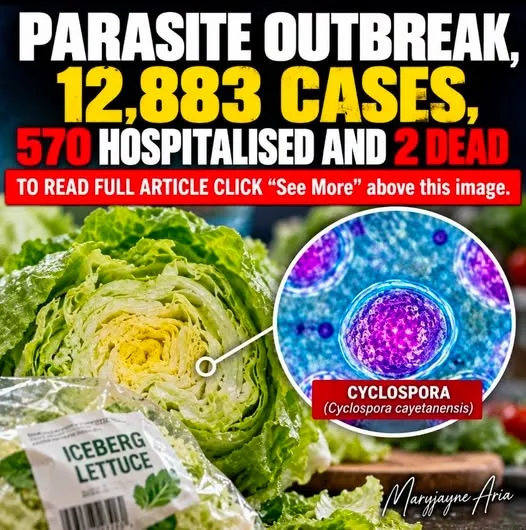
CYCLOSPORA: THE PARASITE HIDING IN PLAIN SIGHT: I have spent many years studying parasites, and outbreaks like this are exactly why I believe parasite awareness matters. We often think of parasites as something distant, unusual or associated with travel, yet this outbreak occurred through an everyday food product entering an enormous supply chain. According to the final CDC update on 11 September 2026, 12,883 laboratory-confirmed illnesses were associated with this multistate Cyclospora outbreak, 570 people were hospitalised and two people died across 21 states. The CDC has declared the outbreak over, but the FDA investigation remains ongoing. I don't believe its over. I personally do not rely on the CDC or the FDA information, I have many reasoning for believing they are not independant or reliable sources of information!
WHAT CAUSED THE OUTBREAK?: FDA traceback investigations converged on iceberg lettuce sourced from central Mexico and supplied by Taylor Farms de Mexico. On 17 July 2026, Taylor Farms de Mexico "voluntarily" recalled iceberg lettuce sourced from central Mexico from the U.S. market. Importantly, the FDA has not yet publicly established the precise point or mechanism by which the lettuce became contaminated. This is yet another reason I do not to trust the FDA!
WHAT REALLY SHOCKS ME: The number is 12,883 confirmed illnesses, but even that figure does not represent everyone who actually became infected. The CDC has explained that the true number of sick people was likely significantly higher because some people recover without seeking medical care and therefore are never tested. Recent cases can also take time to be linked to an outbreak. This is something I think the public needs to understand: reported parasite cases are not necessarily the same thing as the number of people who were actually infected.
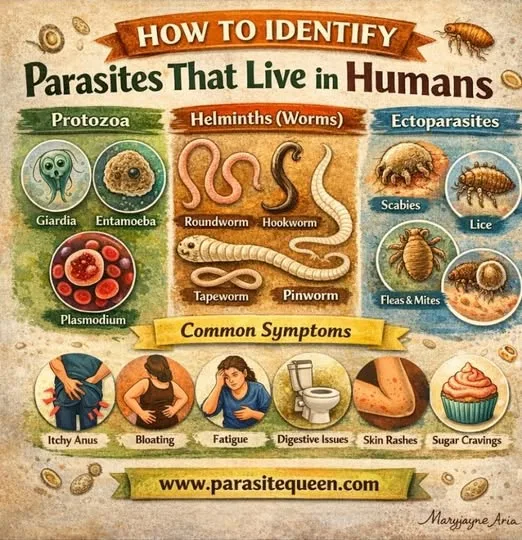
WHAT IS CYCLOSPORA?: Cyclospora cayetanensis is a microscopic parasite that causes an intestinal infection called cyclosporiasis. It is not a large worm that can be seen with the naked eye. The parasite is so small that microscopy or specialised laboratory testing is required for identification. Cyclospora generally spreads when food or water becomes contaminated with infected human faecal matter. Unlike many infections, direct person-to-person transmission is considered unlikely because the parasite needs time after being passed in faeces before it becomes infectious.
THE SYMPTOMS ARE MISERABLE: Cyclosporiasis commonly causes watery diarrhoea and frequent bowel movements, but people also experience abdominal cramps and incredible amounts of pain, bloating, increased gas, nausea, fatigue, loss of appetite and weight loss. Some people may have no symptoms. Untreated illness can persist for weeks or longer, and symptoms can disappear and then return. In some people, particularly those with compromised immune systems or vulnerable complications can be more serious and cause death.
THE MEDICAL PROTOCOL USED: The CDC's recommended treatment of choice for cyclosporiasis is trimethoprim-sulfamethoxazole, commonly known as TMP-SMX. For immunocompetent adults, the CDC lists 160 mg of trimethoprim plus 800 mg of sulfamethoxazole orally twice daily for 7 to 10 days. People with weakened immune systems may require longer treatment. Treatment should be determined by a healthcare professional because allergies, drug interactions, pregnancy, kidney function and other individual factors can affect whether this medication is appropriate.
WHAT IF TMP-SMX CANNOT BE USED?: This is an important point because there is no equally well-established alternative. CDC guidance states that highly effective alternatives have not been identified for people who cannot tolerate or are allergic to TMP-SMX. Other medicines have been considered in some circumstances, but evidence for their effectiveness is limited. This is another reason why identifying the actual parasite matters. Different parasites require different approaches, and treating blindly can mean treating the wrong organism.
WHY DIAGNOSIS MATTERS TO ME: Cyclospora can be missed because it requires specific laboratory investigation. A person with prolonged diarrhoea may initially assume they have food poisoning, a stomach infection or another gastrointestinal condition. If Cyclospora is not considered and the appropriate testing is not performed, the infection can remain unidentified. CDC guidance notes that multiple stool specimens collected on different days may sometimes be necessary because parasite shedding can vary.
COULD THIS HAVE BEEN PREVENTED?: This is the question I keep coming back to personally. I cannot say that this particular outbreak could definitely have been prevented because the FDA's investigation into the exact contamination event is still continuing, time will tell, the FDA will not release the full information file. However, there are established measures specifically intended to reduce the risk of Cyclospora contaminating fresh produce. These include agricultural water management, worker health and hygiene controls, sanitation practices and strong supplier programs.
WHERE PREVENTION SHOULD BEGIN: Cyclospora is associated with human faecal contamination, so prevention has to begin before lettuce reaches a processing facility, restaurant or supermarket. Agricultural water sources, sanitation systems, worker hygiene, toilet facilities, harvesting practices, processing equipment and supply-chain controls all matter. These are not complicated concepts. They are basic contamination controls that should be taken extremely seriously when food is being produced for millions of people. I believe that all workers should be routinely tested but that measure is never carried out!
THIS IS WHERE I BELIEVE WE NEED TO DO BETTER: We should not wait until thousands of people are sick before asking whether the system worked. Prevention means identifying potential contamination risks at the farm, monitoring agricultural water, maintaining strict worker hygiene, maintaining sanitation throughout processing, strengthening supplier verification and improving surveillance and testing. The FDA must do more regarding prevention, stronger response activities, better testing capacity and further research as priorities.
AND HERE I HAVE TO BE HONEST ABOUT MY OWN VIEW: I have little confidence in the CDC and FDA, because personally I do not find either organisation sufficiently independent. That is my opinion and my reason for looking beyond their statements rather than simply accepting every official conclusion without question. I am not saying that every piece of information they publish is wrong. I am saying that, after many years of researching health and parasites, I believe people should examine the evidence, question conclusions where appropriate and look at the underlying data for themselves, and not count on thier statements.
THE TWO DEATHS MUST NOT BE FORGOTTEN: Two people in Michigan died during this outbreak. FDA reported as a get out statement that both had significant underlying health conditions that may have been adversely affected by cyclosporiasis and dehydration, and both had illness onset before the July 17 recall. I think it is important to report this accurately without sensationalising it, but I also do not believe the deaths should disappear beneath a headline saying that the outbreak is over.
THE RECALL CAME AFTER THE OUTBREAK WAS WELL UNDERWAY: This is another part that concerns me. The traceback investigation converged on the supplier on July 17, when the voluntary recall was initiated. Many illnesses had already begun well before the recall. I am not suggesting that regulators ignored the problem but the possibility is high if we look at history. Foodborne parasite outbreaks can be identified quickly to avoid contamination before it has already entered a large distribution network. Sadly the necessary measures were not put in place.
HOW MANY PEOPLE WERE NEVER COUNTED?: This is the question I keep asking. If the true number of sick people was likely higher because some recovered without medical care or were never tested, then 12,883 is not necessarily the full story. How many people experienced diarrhoea, cramping, fatigue or weight loss and simply assumed it was a stomach bug? How many never had a Cyclospora test? How many cases were never connected to this outbreak? How many were misdiagnosed, How many actually died. We cannot know the exact number, and I think that uncertainty itself is important.
THIS IS WHY PARASITE AWARENESS MATTERS TO ME: I have spent years studying parasites, and one of the things I continually see is how easily these organisms are overlooked. I am not saying that every case of gastrointestinal illness is caused by a parasite. I am saying that parasites should remain part of the diagnostic conversation when the symptoms, exposure history and clinical picture make them plausible. This outbreak is a very real example of what can happen when a microscopic organism enters the food chain.
THE OUTBREAK MAY BE OVER, BUT THE PROBLEM IS NOT: The specific iceberg-lettuce outbreak has been declared over, and the recalled lettuce should no longer be on the market. But Cyclospora has not disappeared. The FDA has described recurring produce-associated outbreaks as a serious public-health concern but they are cerainly not doing enough to stop it.
MY PERSONAL VIEW: When 12,883 people become laboratory-confirmed cases, 570 require hospitalisation and two people die, I do not think the story should simply end with the words "outbreak over." For me, the bigger question is what we learn from it. Could stronger controls have reduced the risk? Could earlier detection have reduced the number of people exposed? Could improved agricultural water monitoring, sanitation, worker hygiene, supplier verification and faster surveillance have changed the course? Those are precisely the questions that now need serious answers. I will be watching for those answers, but I will also continue to question the official narrative and examine the evidence for myself.
Please share this information to help increase awareness.
Copyright Maryjayne Aria , author of Immune Health, Terrain and GcMAF.