A nationwide recall has been issued for levothyroxine sodium tablets after testing.
Levothyroxine is one of the most commonly prescribed medications worldwide. It is a synthetic form of the thyroid hormone thyroxine (T4), which the body naturally produces. Millions of people rely on this medication every day to maintain healthy thyroid hormone levels.
What Is Levothyroxine Used For?
Levothyroxine is prescribed to treat several thyroid-related conditions, including:
• Hypothyroidism (an underactive thyroid)
• Hashimoto's thyroiditis
• Following thyroid surgery
• Thyroid cancer, to suppress thyroid-stimulating hormone (TSH) after treatment
• Certain cases of goitre (enlarged thyroid)
When the medication is working correctly, it can help regulate metabolism, body temperature, heart rate, energy production, brain function and many other essential processes.
Why Was It Recalled?
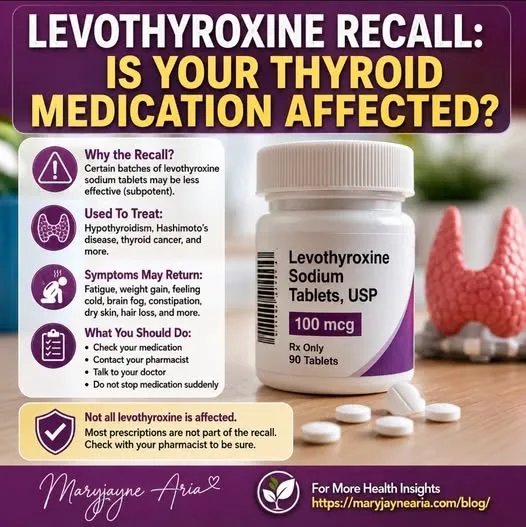
The recalled tablets were found to be subpotent, meaning they contain hardly any active levothyroxine than stated on the label. As a result, patients will not receive the dose intended, which allows symptoms of low thyroid hormone levels to return. The FDA has classified this as a Class II recall, meaning it causes temporary or medically reversible health effects.
Symptoms That Return
If your medication is less effective than expected, you will notice symptoms such as:
• Fatigue
• Feeling cold more often
• Weight gain
• Constipation
• Dry skin
• Hair thinning or hair loss
• Depression or low mood
• Brain fog
• Slower heart rate
• Muscle weakness
• Puffy face
• Increased cholesterol levels
Because thyroid hormone affects nearly every organ in the body, even small reductions in dosage can affect some people.
Who Is Most At Risk?
Certain individuals are more sensitive to changes in thyroid hormone levels, including:
• Pregnant women
• Infants and young children
• Older adults
• People with heart disease
• Patients recovering from thyroid cancer
• Anyone who has had their thyroid removed
These individuals should contact their healthcare provider promptly if they believe they have received recalled medication.
What Should You Do?
If you take levothyroxine:
1. Check your medication packaging and compare the manufacturer, lot number and expiry date with the official recall information.
2. Do not stop taking your medication suddenly unless instructed by your healthcare provider.
3. Contact your pharmacist if you believe your medication is part of the recall.
4. Speak with your doctor if you develop symptoms suggesting your thyroid levels are becoming too low.
5. Your doctor may recommend repeat thyroid blood tests, including TSH and free T4, if necessary.
Is Every Levothyroxine Tablet Recalled?
No. The recall only affects specific batches distributed by Major Pharmaceuticals. Some levothyroxine prescriptions are not affected.
The Bottom Line:
Check whether your medication is one of the affected batches and contact your pharmacist or healthcare provider if you have any concerns.