Vitamin D deficiency is one of the most common nutritional deficiencies worldwide, yet many people have never had their levels checked.
Vitamin D is essential for bone health, muscle function, and a healthy immune system. Without enough vitamin D, your body cannot efficiently absorb calcium, making healthy vitamin D levels important for maintaining strong bones and reducing the risk of bone disorders caused by deficiency.
Many people believe that simply spending time in the sunshine is enough. Unfortunately, that is not always the case. Age, skin tone, where you live, the season, sunscreen, clothing, air pollution, and spending more time indoors can all reduce your body's ability to make vitamin D. Even people living in sunny countries can be deficient.
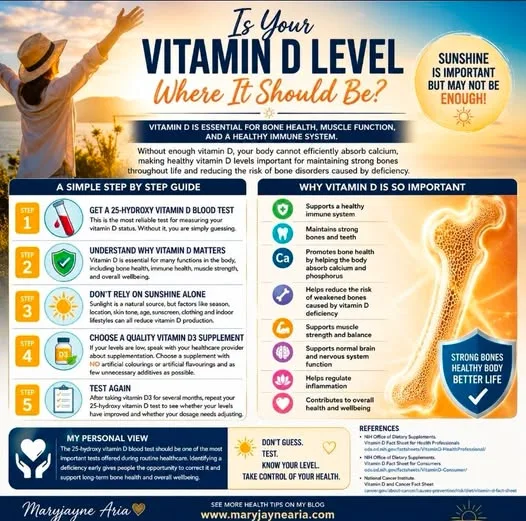
A Simple Step by Step Guide
Step 1: Ask your doctor for a 25-hydroxy vitamin D blood test.
This is the most reliable test for measuring your vitamin D status. Without it, you are simply guessing.
Step 2: Understand why vitamin D matters.
Vitamin D is essential for:
• Supporting a healthy immune system.
• Maintaining strong bones and teeth.
• Promoting bone health by helping the body absorb calcium and phosphorus.
• Helping reduce the risk of weakened bones caused by vitamin D deficiency.
• Supporting muscle strength and balance.
• Supporting normal brain and nervous system function.
• Helping regulate inflammation.
• Contributing to overall health and wellbeing.
Step 3: Don't rely on sunshine alone.
Sunlight is an important source of vitamin D, but for many people it is not enough to maintain healthy levels throughout the year.
Step 4: Choose a quality vitamin D3 supplement.
If your levels are low, speak with your healthcare provider about supplementation. Choose a vitamin D3 supplement with no artificial colourings or artificial flavourings, and no additives, with the exception of lichen, which needs to be synthesized to utilize as D3.
Step 5: Test again.
After taking vitamin D3 for several months, repeat your 25-hydroxy vitamin D blood test to see whether your levels have improved and whether your supplementation needs adjusting.
My Personal View
In my opinion, the 25-hydroxy vitamin D blood test should be one of the most important blood tests offered during routine healthcare. Vitamin D plays a vital role in bone health and many other functions throughout the body. Identifying a deficiency early gives people the opportunity to work with their healthcare professional to correct it before it may contribute to health problems.
Don't guess.
Test.
Know your level.
Take control of your health.



