Iron deficiency is one of the world's most common nutritional deficiencies. Many people are told their blood tests are "normal" because their hemoglobin is within range, yet their ferritin, which measures iron stores, is already low. This stage, known as iron deficiency without anemia, can cause symptoms long before anemia develops.
Why Iron Matters • Carries oxygen throughout the body • Supports energy production • Maintains brain function • Strengthens immunity • Promotes healthy hair growth • Supports thyroid hormone activity • Helps muscles function normally
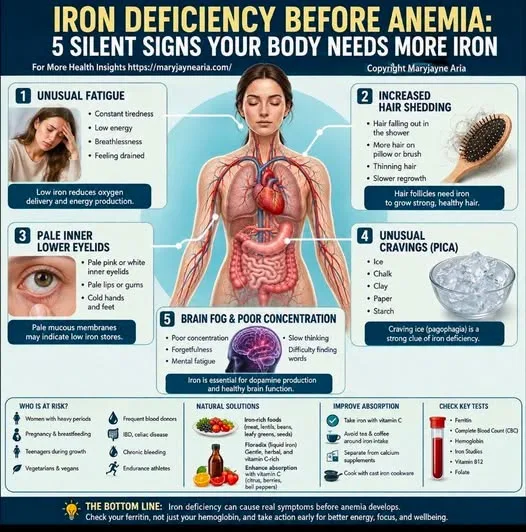
1. Unusual Fatigue • Constant tiredness despite sleeping well • Reduced stamina • Breathlessness with mild activity • Feeling physically drained
Low iron limits oxygen delivery and reduces cellular energy production.
2. Increased Hair Shedding • Hair falling out in the shower • More hair on pillows or brushes • Thinning hair • Slower regrowth
Hair follicles require a constant supply of iron. Hair loss often begins 2 to 3 months after iron stores decline.
3. Pale Inner Lower Eyelids • Pale pink or white inner eyelids • Pale lips or gums • Cold hands and feet
Although not diagnostic on its own, pale mucous membranes may suggest iron deficiency.
4. Unusual Cravings (Pica) • Ice • Chalk • Clay • Paper • Starch
Craving ice, known as pagophagia, is one of the strongest clues of iron deficiency.
5. Brain Fog • Poor concentration • Forgetfulness • Mental fatigue • Slow thinking • Difficulty finding words
Iron is essential for dopamine production and healthy brain function.
Ferritin vs Hemoglobin Hemoglobin • Measures oxygen-carrying capacity • May remain normal early on • Diagnoses anemia
Ferritin • Measures stored iron • Falls earlier than hemoglobin • Detects iron depletion before anemia develops
A normal hemoglobin does not always mean iron stores are adequate.
Who Is at Risk? • Women with heavy periods • Pregnancy and breastfeeding • Teenagers during growth • Vegetarians and vegans • Frequent blood donors • People with celiac disease or inflammatory bowel disease • Individuals with chronic bleeding • Endurance athletes
Medical Treatment • Ferrous sulfate • Ferrous fumarate • Ferrous gluconate • Iron bisglycinate • Intravenous iron when necessary
Treatment should always include finding and correcting the underlying cause.
Natural Approaches:
Iron-Rich Foods • Lean red meat • Liver (in moderation) • Shellfish • Sardines • Lentils • Chickpeas • Beans • Pumpkin seeds • Spinach • Kale • Quinoa
Floradix (Floravital) A popular liquid iron supplement that combines iron with herbal extracts and fruit concentrates.
Potential Benefits • Gentle on the stomach • Often causes less constipation • Contains vitamin C-rich juices to aid absorption • Suitable for mild deficiency or those who struggle with standard tablets
Moderate to severe deficiency may still require higher-dose prescription iron or intravenous treatment.
Other Well-Tolerated Options • Iron bisglycinate • Heme iron polypeptide • Food-based iron supplements
Improve Iron Absorption • Take iron with vitamin C • Avoid tea and coffee around iron intake • Separate iron from calcium supplements • Cook with cast iron cookware
Do Not Self-Treat Long Term
Too much iron can damage the liver, heart, and other organs. Always confirm deficiency with blood tests and investigate possible causes such as heavy menstrual bleeding, gastrointestinal blood loss, poor diet, or malabsorption.
Key Blood Tests • Ferritin • Complete blood count (CBC) • Hemoglobin • Iron studies • Vitamin B12 • Folate • Thyroid function when appropriate
The Bottom Line:
Iron deficiency often develops quietly before anemia appears. If you experience persistent fatigue, hair loss, pale eyelids, unusual cravings, or brain fog, ask your healthcare provider to check your ferritin, not just your hemoglobin. Early diagnosis, appropriate treatment, iron-rich nutrition, and supportive options such as Floradix or iron bisglycinate may help restore healthy iron levels and improve overall wellbeing.
Feel free to share this post without making any alterations.