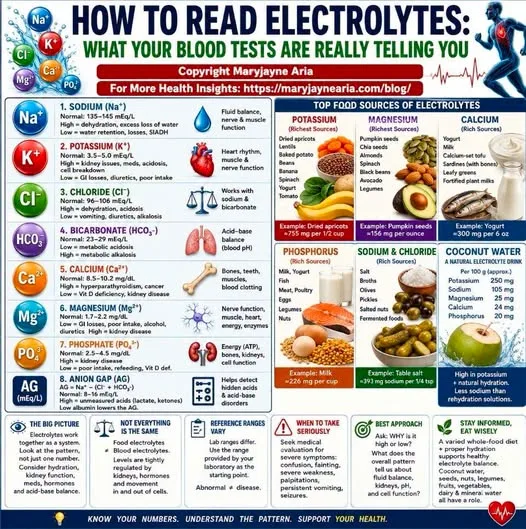
Electrolytes are electrically charged minerals essential for hydration, nerve signalling, muscle contraction, heart rhythm, blood pressure, cellular function and acid-base balance. The major electrolytes assessed in blood testing include sodium, potassium, chloride, bicarbonate, calcium, magnesium and phosphate.
1. SODIUM (Na+): THE MAIN FLUID-BALANCE ELECTROLYTE Sodium is the major extracellular cation and is influenced strongly by the relationship between sodium and water rather than simply dietary salt intake. A commonly used serum range is approximately 135 to 145 mEq/L, although laboratory ranges vary. High sodium, or hypernatremia, commonly reflects insufficient water relative to sodium and may occur with dehydration or excessive water loss. Low sodium, or hyponatremia, can result from excess water retention, sodium loss, medications, gastrointestinal losses, endocrine disorders and kidney problems. SIADH is primarily associated with low sodium because inappropriate antidiuretic hormone activity promotes water retention.
2. POTASSIUM (K+): CRITICAL FOR HEART AND MUSCLE FUNCTION Potassium is essential for electrical signalling in nerves and muscles and normal cardiac rhythm. A commonly used range is approximately 3.5 to 5.0 mEq/L. High potassium can occur with impaired kidney function, certain medications, metabolic acidosis, tissue breakdown or movement of potassium from cells into the bloodstream. Low potassium may occur with gastrointestinal losses, inadequate intake, diuretics, metabolic alkalosis or movement of potassium into cells. Significant potassium abnormalities can interfere with cardiac electrical activity.
3. CHLORIDE (Cl-): WORKS WITH SODIUM AND BICARBONATE Chloride is the major extracellular anion and helps maintain fluid and acid-base balance. A commonly used serum range is approximately 96 to 106 mEq/L. High chloride can occur with dehydration and certain acid-base disorders, while low chloride can occur with vomiting, gastric losses, some diuretics and metabolic alkalosis. Chloride is most informative when interpreted alongside sodium and bicarbonate.
4. BICARBONATE (HCO3-): A WINDOW INTO ACID-BASE BALANCE Bicarbonate helps regulate blood pH. On many chemistry panels, the reported "CO2" value primarily reflects serum bicarbonate. A commonly used range is approximately 23 to 29 mEq/L. Low bicarbonate can occur with metabolic acidosis, while elevated bicarbonate can occur with metabolic alkalosis. Blood gas testing may be required for a more detailed assessment of acid-base physiology.
5. CALCIUM (Ca2+): LOOK BEYOND THE TOTAL NUMBER Calcium is essential for bones, teeth, muscle contraction, nerve transmission and blood clotting. Total serum calcium is commonly around 8.5 to 10.2 mg/dL, depending on the laboratory. Total calcium should be interpreted alongside albumin because much circulating calcium is protein-bound. Ionized calcium represents the biologically active fraction. High calcium can occur with primary hyperparathyroidism and some malignancies, while low calcium can occur with vitamin D deficiency, hypoparathyroidism, kidney disease and other conditions.
6. MAGNESIUM (Mg2+): ESSENTIAL FOR HUNDREDS OF REACTIONS Magnesium participates in hundreds of biochemical reactions and supports nerve function, muscle contraction, energy metabolism and cardiac activity. A commonly used serum range is approximately 1.7 to 2.2 mg/dL. Low magnesium may occur with inadequate intake, gastrointestinal losses, alcohol-related problems and certain medications. Magnesium deficiency can coexist with low potassium or calcium.
7. PHOSPHATE (PO4): CONNECTED TO ENERGY, BONES AND KIDNEYS Phosphate is required for ATP energy metabolism, DNA and RNA, cell membranes, bone mineralisation and acid-base regulation. Kidney function strongly influences phosphate levels. High phosphate is commonly associated with impaired kidney function, while low phosphate can occur with inadequate intake, malnutrition, refeeding syndrome and increased cellular uptake. Vitamin D, parathyroid hormone, calcium and kidney function all influence phosphate metabolism.
8. THE ANION GAP: A CALCULATION THAT CAN REVEAL HIDDEN ACIDS The anion gap is calculated from measured electrolytes: Anion gap = Na+ - (Cl- + HCO3-). For example, Na 140 - (Cl 100 + HCO3 24) gives an anion gap of 16 mEq/L. An increased anion gap can occur when unmeasured acids accumulate, including lactate and ketones. Low albumin can make the anion gap appear lower than expected, so albumin should be considered when interpreting the result.
9. POTASSIUM-RICH FOODS: SOME OF THE STRONGEST SOURCES Potassium-rich foods include dried apricots, lentils, potatoes, beans, acorn squash, prunes, raisins, spinach, bananas, tomatoes, yogurt and fish. The NIH lists dried apricots at approximately 755 mg potassium per half cup, cooked lentils at approximately 731 mg per cup and a medium baked potato at approximately 610 mg.
10. MAGNESIUM-RICH FOODS: SEEDS AND NUTS LEAD THE LIST Pumpkin seeds provide approximately 156 mg magnesium per ounce and chia seeds approximately 111 mg per ounce. Almonds, leafy greens, legumes and whole grains are also useful sources.
11. CALCIUM-RICH FOODS: DAIRY AND PLANT SOURCES Yogurt, milk and other dairy products are concentrated calcium sources. Calcium-set tofu, sardines with bones, certain leafy greens and fortified plant milks can also contribute substantial calcium. Absorption varies between foods.
12. PHOSPHORUS-RICH FOODS: COMMON IN PROTEIN FOODS Dairy products, fish, meat, poultry, eggs, legumes and nuts can provide substantial phosphorus. Phosphate metabolism is particularly important when considering kidney function, calcium and vitamin D status.
13. COCONUT WATER: A NATURAL ELECTROLYTE SOURCE Coconut water naturally contains several electrolytes and a high proportion of water. Typical nutritional data show approximately 250 mg potassium, 105 mg sodium, 25 mg magnesium, 24 mg calcium and 20 mg phosphorus per 100 g, although mineral concentrations vary with coconut variety, maturity and processing. Coconut water is therefore particularly useful as a natural potassium-containing beverage, but it should not be confused with a medical oral rehydration solution because its sodium content is relatively modest.
14. OTHER NATURAL ELECTROLYTE SOURCES Mineral water can contribute calcium and magnesium, although concentrations vary dramatically between sources. Fruits and vegetables provide potassium, while legumes, nuts and seeds are particularly useful for magnesium, potassium and phosphorus. Dairy products and fortified alternatives can contribute calcium and phosphorus. Salt and salty foods provide concentrated sodium and chloride.
15. THE BEST ELECTROLYTE FOOD DEPENDS ON THE MINERAL If you want potassium, think potatoes, lentils, beans, dried fruit, squash and fruits and vegetables. For magnesium, think pumpkin seeds, chia seeds, almonds, leafy greens and legumes. For calcium, think yogurt, dairy, fortified alternatives, calcium-set tofu and certain fish. For phosphorus, think dairy, fish, poultry, eggs, legumes and nuts. For sodium and chloride, salt provides a concentrated source. For fluid plus naturally occurring electrolytes, coconut water can be useful, particularly for potassium.
16. FOOD ELECTROLYTES AND BLOOD ELECTROLYTES ARE NOT THE SAME THING Eating a food containing an electrolyte does not automatically mean that the concentration of that electrolyte in your blood will rise. Blood electrolyte levels are tightly regulated by the kidneys, hormones, gastrointestinal tract, bones and movement of minerals into and out of cells. This is especially important with potassium. People with impaired potassium excretion or certain medical conditions and medications may actually need to restrict potassium rather than increase it.
17. NEVER INTERPRET ONE ELECTROLYTE IN ISOLATION Sodium should be considered alongside hydration and fluid status. Potassium should be considered alongside kidney function, medications and acid-base status. Chloride should be assessed with sodium and bicarbonate. Bicarbonate should be interpreted within the broader acid-base picture. Calcium may need to be considered with albumin, magnesium, phosphate, vitamin D and parathyroid hormone. Phosphate should be assessed alongside kidney and mineral metabolism.
THE BIGGER PICTURE Electrolytes demonstrate how interconnected human physiology is. Sodium regulates much of extracellular fluid balance, potassium controls cellular electrical activity, chloride participates in fluid and acid-base regulation, bicarbonate helps maintain pH, calcium supports bones and cellular signalling, magnesium participates in hundreds of reactions and phosphate is central to energy metabolism and skeletal health.
There is no single "best electrolyte food." The most appropriate source depends on which mineral is required, the overall diet, hydration status, kidney function, medications and laboratory results. Coconut water can provide a useful combination of fluid and naturally occurring electrolytes, particularly potassium, while seeds, nuts, legumes, fruits, vegetables, dairy, fish and mineral water can contribute different electrolyte profiles.
The most important question is not simply, "Is this electrolyte high or low?" It is, "Why is it high or low, and what does the overall pattern tell us about fluid balance, kidney function, acid-base physiology and mineral metabolism?"