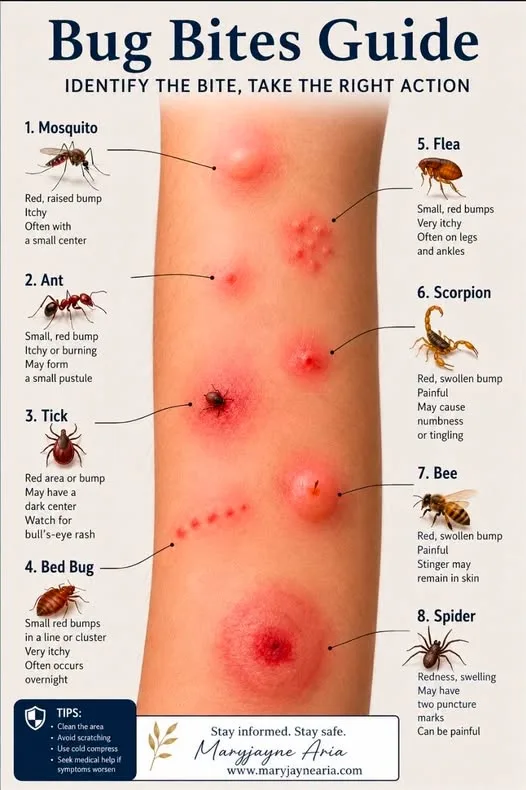
Spending time outdoors is wonderful for both physical and mental health, but it also increases the chance of being bitten or stung by insects. Most bites are harmless and heal within a few days, while others may require medical attention. Learning to recognise common insect bites can help you choose the right treatment and know when to seek professional care.
1. Mosquito Bite:
How to identify: Mosquito bites are usually raised, round, itchy bumps that appear within minutes of being bitten. They may become red and swollen, especially in people who are more sensitive.
Natural treatments:
• Apply a cold compress for 10 to 15 minutes. • Fresh aloe vera gel helps cool irritated skin. • Witch hazel may reduce itching and inflammation.
• A paste made from bicarbonate of soda and water may help relieve itching.
• Avoid scratching to reduce the risk of infection.
2. Ant Bite:
How to identify: Ant bites often appear as small, red, itchy bumps. Some species, such as fire ants, can produce painful pustules or blisters.
Natural treatments:
• Wash with soap and water.
• Apply aloe vera gel.
• A cool compress helps reduce swelling.
• Calendula cream may soothe irritated skin.
3. Tick Bite:
How to identify: A tick may still be attached to the skin. After removal, a small red bump often remains. Watch carefully for an expanding circular rash, sometimes called a bull's-eye rash, which can be associated with Lyme disease.
Natural treatments:
• Remove the tick carefully with fine-tipped tweezers.
• Clean the area thoroughly.
• Apply diluted tea tree oil around the bite after the tick has been removed.
• Monitor the bite for several weeks.
Seek medical advice immediately if you develop fever, fatigue, joint pain, or an expanding rash.
4. Bed Bug Bite:
How to identify: Bed bug bites usually appear in straight lines or clusters, often on the arms, shoulders, neck, or legs after sleeping. They are intensely itchy.
Natural treatments:
• Apply a cold compress.
• Oatmeal paste or an oatmeal bath can calm itching.
• Aloe vera helps soothe the skin.
• Wash bedding in hot water and inspect your sleeping area thoroughly.
5. Flea Bite:
How to identify: Flea bites are small, intensely itchy bumps that commonly occur around the ankles and lower legs. They often appear in groups.
Natural treatments:
• Wash the area well.
• Witch hazel may reduce itching.
• Aloe vera gel provides cooling relief.
• Treat household pets and the home environment to prevent further bites.
6. Scorpion Sting:
How to identify: A scorpion sting causes immediate pain, redness, swelling, tingling, or numbness.
Natural treatments:
• Apply a cold compress.
• Keep the affected limb still.
• Stay well hydrated.
Seek urgent medical attention if symptoms become severe, especially in children, older adults, or anyone experiencing difficulty breathing or widespread symptoms.
7. Bee Sting:
How to identify: Bee stings usually produce immediate pain, redness, swelling, and sometimes leave the stinger embedded in the skin.
Natural treatments:
• Remove the stinger by scraping it away with a fingernail or bank card.
• Apply a cold compress.
• Aloe vera may reduce irritation.
• Honey has natural soothing properties and may support skin healing.
Seek emergency medical help if there are signs of an allergic reaction, including difficulty breathing, swelling of the face or throat, dizziness, or collapse.
8. Spider Bite:
How to identify: Most spider bites cause mild redness, swelling, and discomfort. Some venomous species can cause severe pain, blistering, or tissue damage.
Natural treatments:
• Wash the bite thoroughly.
• Apply a cold compress.
• Elevate the affected area if swollen.
• Aloe vera or calendula cream may help soothe the skin.
Seek urgent medical attention if severe pain, spreading redness, fever, muscle cramps, or skin breakdown develops.
General Tips for All Insect Bites:
• Wash bites promptly with mild soap and water.
• Avoid scratching to reduce infection risk.
• Keep the skin clean and dry.
• Stay hydrated to support healing.
• If swelling is severe or symptoms worsen, seek medical advice promptly.
Your skin is often the first line of defence against the outside world. Knowing how to identify common bites and respond appropriately can help you recover more comfortably and recognise when medical treatment is needed.
For more health insights , please visit https://maryjaynearia.com/blog/
Written by Maryjayne Aria author of immune health, terrain and GcMaf



