Red light therapy has become one of the most talked about noninvasive wellness treatments in recent years. Once reserved primarily for medical clinics and research facilities, it is now widely available in homes, gyms, beauty clinics, and healthcare practices around the world.
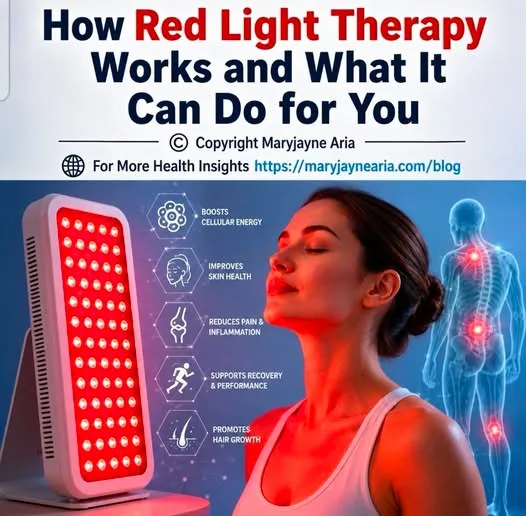
Supporters claim it can improve skin health, reduce inflammation, speed recovery from exercise, ease joint pain, promote wound healing, and even support hair growth. While some of these claims have strong scientific backing, others are still being investigated.
Understanding how red light therapy works helps separate established science from exaggerated marketing claims.
For more health insights and evidence based articles, visit:
What Is Red Light Therapy?
Red light therapy, sometimes called low level light therapy (LLLT), photobiomodulation (PBM), or cold laser therapy, involves exposing the body to specific wavelengths of visible red and near infrared light.
Unlike ultraviolet (UV) light from the sun, red light therapy does not damage DNA or cause sunburn. Instead, it delivers light energy that penetrates the skin and is absorbed by cells.
The two most commonly used wavelength ranges are:
• Red light: approximately 620 to 700 nanometres (nm)
• Near infrared light: approximately 700 to 1100 nanometres (nm)
Red light primarily affects the skin and tissues close to the surface, while near infrared light penetrates deeper into muscles, tendons, ligaments, and joints.
How Does Red Light Therapy Work?
Every cell in your body contains tiny structures called mitochondria. These are often described as the "powerhouses" of the cell because they produce adenosine triphosphate (ATP), the molecule that provides energy for nearly every biological process.
One of the main targets of red light therapy is an enzyme inside mitochondria called cytochrome c oxidase.
When red and near infrared light reaches this enzyme, several important processes may occur:
• Increased production of ATP
• Improved cellular energy
• Better oxygen utilisation
• Reduced oxidative stress
• Enhanced cellular repair
• Increased production of protective antioxidants
More cellular energy means cells can perform their normal functions more efficiently, including repairing damaged tissue and reducing inflammation.
Effects on Inflammation:
Inflammation is an essential part of healing, but chronic inflammation contributes to numerous diseases.
Research suggests red light therapy may help regulate inflammatory responses by:
• Reducing inflammatory signalling molecules
• Supporting healthy immune responses
• Improving blood circulation
• Decreasing oxidative damage
Rather than simply suppressing inflammation, red light therapy appears to help the body restore balance.
Improved Blood Flow:
Healthy circulation delivers oxygen and nutrients to tissues while removing waste products.
Red light therapy has been shown to:
• Increase microcirculation
• Promote formation of new capillaries
• Improve oxygen delivery
• Enhance tissue repair
Better circulation is one reason many people report faster recovery after injuries or strenuous exercise.
Skin Benefits
One of the best studied uses of red light therapy involves skin rejuvenation.
Research has shown improvements in:
• Fine lines
• Wrinkles
• Skin elasticity
• Collagen production
• Acne inflammation
• Scar healing
• Overall skin texture
Fibroblasts, the cells responsible for producing collagen and elastin, appear to become more active after exposure to therapeutic wavelengths.
Wound Healing:
Medical researchers have investigated red light therapy for decades in wound care.
Studies suggest it helps:
• Accelerate healing after surgery
• Promote tissue regeneration
• Reduce swelling
• Improve healing of diabetic ulcers
• Speed recovery from burns
• Reduce scar formation
These effects are believed to result from improved cellular energy and increased production of growth factors involved in tissue repair.
Muscle Recovery and Athletic Performance:
Athletes increasingly use red light therapy before and after training.
Potential benefits include:
• Reduced muscle soreness
• Faster recovery
• Improved endurance
• Less muscle fatigue
• Reduced exercise induced inflammation
Although it is not a substitute for proper nutrition and training, many studies suggest it can support recovery.
Joint Pain and Arthritis:
People with osteoarthritis and rheumatoid arthritis often report symptom improvement with regular red light therapy.
Potential benefits include:
• Reduced joint stiffness
• Less pain
• Improved mobility
• Reduced swelling
Pain relief often develops gradually over several weeks of consistent treatment.
Hair Growth:
Several clinical studies have shown benefits for certain types of hair loss, especially androgenetic alopecia, also known as male and female pattern baldness.
Red light therapy may:
• Stimulate dormant hair follicles
• Increase blood supply to the scalp
• Extend the hair growth phase
• Improve hair density
Results usually require consistent treatment over several months.
Nerve Function:
Emerging research suggests red light therapy may support nerve regeneration after injury.
Scientists are studying its potential role in:
• Peripheral nerve injuries
• Neuropathy
• Recovery following surgery
• Nerve related pain
Although promising, more high quality clinical trials are still needed.
Brain Health:
Near infrared light can penetrate the scalp to a limited extent.
Researchers are investigating possible benefits for:
• Mild cognitive impairment
• Traumatic brain injury
• Depression
• Anxiety
• Parkinson's disease
• Alzheimer's disease
While early studies are encouraging, these applications remain experimental and should not replace standard medical care.
Can Red Light Therapy Boost the Immune System?
Healthy mitochondria are essential for proper immune cell function.
By improving mitochondrial activity and reducing excessive oxidative stress, red light therapy may help support normal immune function.
However, it should not be considered a cure or treatment for infections, autoimmune diseases, or cancer without appropriate medical supervision.
Is It Safe?
When used according to manufacturer guidelines, red light therapy has an excellent safety profile.
Unlike ultraviolet light, it does not:
• Damage DNA
• Cause sunburn
• Increase skin cancer risk through UV exposure
Possible side effects are uncommon but may include:
• Temporary redness
• Mild warmth
• Eye discomfort if appropriate eye protection is not used
People taking medications that increase sensitivity to light should consult their healthcare provider before beginning treatment.
How Long Does It Take to See Results?
Results vary depending on the condition being treated.
Many people notice:
• Skin improvements within 4 to 8 weeks
• Reduced muscle soreness after several treatments
• Joint pain improvement within several weeks
• Hair growth after 3 to 6 months of consistent use
Consistency is one of the most important factors for success.
Choosing a Quality Device:
Not all red light therapy devices are created equal.
Important factors include:
• Appropriate therapeutic wavelengths
• Adequate light intensity
• Treatment area size
• Treatment duration
• Safety certification
Medical grade devices often deliver higher and more consistent energy than inexpensive consumer products.
The Bottom Line:
Red light therapy is a scientifically supported technology that works by improving the way cells produce and use energy. By stimulating mitochondrial function, enhancing ATP production, improving circulation, and helping regulate inflammation, it may support the body's natural healing processes.
The strongest scientific evidence currently supports its use for improving skin health, promoting wound healing, reducing pain and inflammation, easing symptoms of certain joint disorders, enhancing muscle recovery, and encouraging hair growth in some individuals.
Although research into brain health, nerve regeneration, and immune support is exciting, these areas require further clinical studies before firm conclusions can be drawn.
Red light therapy is not a miracle cure, but when used consistently alongside healthy lifestyle habits and appropriate medical care, it can be a valuable tool for supporting recovery, wellness, and healthy ageing.