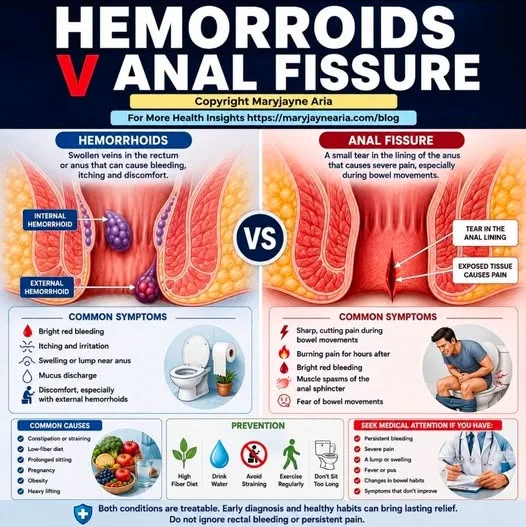
Pain, itching, and bleeding during or after a bowel movement are symptoms that many people experience at some point in their lives. Two of the most common causes are hemorrhoids and anal fissures. Although these conditions affect the same area and may produce similar symptoms, they are very different disorders that require different approaches to treatment.
Understanding the distinction between hemorrhoids and anal fissures is important because an accurate diagnosis can help ensure effective treatment and prevent unnecessary suffering.
What Are Hemorrhoids?
Hemorrhoids are enlarged, swollen veins located in the lower rectum and anus. They are similar to varicose veins that develop in the legs.
There are two main types:
• Internal hemorrhoids develop inside the rectum and are usually painless because this area contains few pain-sensitive nerves. They often cause bright red bleeding during bowel movements.
• External hemorrhoids form beneath the skin around the anus. These are more likely to cause pain, swelling, itching, and discomfort. Occasionally, a blood clot can develop inside an external hemorrhoid, forming a thrombosed hemorrhoid, which can be extremely painful.
What Is an Anal Fissure?
An anal fissure is a small tear or crack in the delicate lining of the anus. Although the tear may be only a few millimeters long, it can cause severe pain because the anal canal contains numerous sensitive nerve endings.
Unlike hemorrhoids, anal fissures often produce intense, sharp pain during bowel movements that may continue for minutes or even hours afterward.
Common Symptoms of Hemorrhoids:
• Bright red blood on toilet paper or in the toilet
• Anal itching
• Swelling around the anus
• A soft lump near the anal opening
• Mucus discharge
• Mild to moderate discomfort
• Pain mainly when external hemorrhoids become thrombosed
Common Symptoms of Anal Fissures:
• Sharp, cutting pain during bowel movements
• Burning pain lasting for hours afterward
• Bright red bleeding
• Visible tear near the anal opening
• Muscle spasms of the anal sphincter
• Fear of bowel movements because of pain
What Causes Hemorrhoids?
Several factors increase the risk of developing hemorrhoids:
• Chronic constipation
• Frequent diarrhea
• Straining during bowel movements
• Pregnancy
• Obesity
• Heavy lifting
• Prolonged sitting
• Low-fiber diet
• Aging, which weakens supporting tissues
What Causes Anal Fissures?
Most anal fissures occur because of trauma to the anal lining.
Common causes include:
• Passing large or hard stools
• Chronic constipation
• Severe diarrhea
• Childbirth
• Inflammatory bowel disease
• Reduced blood supply to the anal tissue
• Persistent muscle spasm of the anal sphincter
How Are They Diagnosed?
A healthcare professional can usually distinguish between the two conditions through a medical history and physical examination.
Additional investigations may include:
• Digital rectal examination
• Anoscopy
• Sigmoidoscopy
• Colonoscopy if bleeding requires further evaluation or if colorectal disease must be excluded
Treatment for Hemorrhoids:
Most hemorrhoids improve with conservative treatment.
Recommended measures include:
• Increasing dietary fiber
• Drinking plenty of water
• Avoiding straining
• Regular physical activity
• Warm sitz baths
• Topical creams or suppositories
• Stool softeners when necessary
More advanced treatments include:
• Rubber band ligation
• Sclerotherapy
• Infrared coagulation
• Surgical hemorrhoidectomy for severe cases
Treatment for Anal Fissures:
The primary goal is to allow the tear to heal while preventing further injury.
Treatment may include:
• High-fiber diet
• Increased fluid intake
• Stool softeners
• Warm sitz baths
• Topical anesthetics
• Prescription creams that relax the anal sphincter, such as nitroglycerin or calcium channel blockers
• Botulinum toxin injections for chronic fissures
• Lateral internal sphincterotomy for persistent fissures that fail conservative therapy
Can These Conditions Be Prevented?
Many cases can be prevented by maintaining healthy bowel habits.
Helpful strategies include:
• Eat 25 to 35 grams of fiber daily
• Drink adequate water
• Avoid prolonged sitting on the toilet
• Exercise regularly
• Respond promptly to the urge to have a bowel movement
• Avoid excessive straining
When Should You Seek Medical Attention?
Rectal bleeding should never be ignored. Although hemorrhoids and fissures are common and usually benign, bleeding can also signal more serious conditions, including colorectal polyps, inflammatory bowel disease, or colorectal cancer.
Medical evaluation is recommended if you experience:
• Persistent bleeding
• Severe pain
• Fever
• Pus or drainage
• A growing lump
• Weight loss
• Changes in bowel habits lasting several weeks
• Symptoms that do not improve with home treatment
The Bottom Line:
Although hemorrhoids and anal fissures share several symptoms, they are distinct conditions with different underlying causes. Hemorrhoids involve swollen blood vessels, whereas anal fissures are tears in the lining of the anus. Both conditions are highly treatable, especially when recognized early.
Maintaining healthy bowel habits through adequate fiber, hydration, regular exercise, and avoiding excessive straining remains the best strategy for preventing both disorders. Anyone experiencing persistent rectal bleeding or severe pain should seek medical assessment to obtain an accurate diagnosis and appropriate treatment.