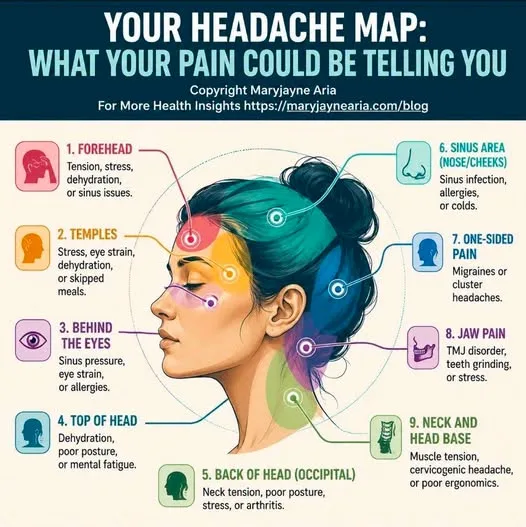
Headaches are one of the most common neurological complaints, affecting millions of people every day. While the location of pain alone cannot diagnose the cause, it often provides valuable clues when combined with symptoms, medical history, and physical examination.
Some headaches are harmless and resolve with rest or hydration, while others may indicate infections, nerve disorders, vascular disease, or serious neurological conditions requiring urgent medical attention.
1. Forehead Pain:
Pain across the forehead is frequently associated with tension headaches or sinus problems.
Possible causes :
• Tension headache
• Sinus inflammation or infection
• Stress and anxiety
• Dehydration
• Eye strain
• Viral illnesses
Pharmaceutical approaches
• Paracetamol (acetaminophen)
• Ibuprofen or naproxen
• Nasal saline sprays
• Corticosteroid nasal sprays
• Antibiotics only if a bacterial sinus infection is confirmed
Natural approaches:
• Drink plenty of water
• Warm compress over the forehead
• Steam inhalation
• Saline nasal irrigation
• Adequate sleep
• Magnesium-rich foods
2. Temple Pain:
Pain over the temples often results from muscle tension, migraines, or jaw disorders.
Possible causes:
• Tension headache
• Migraine
• Teeth grinding (bruxism)
• TMJ dysfunction
• Dehydration
• Giant cell arteritis in older adults
Pharmaceutical approaches:
• NSAIDs
• Migraine medications (triptans when appropriate)
• Muscle relaxants in selected cases
• Preventive migraine medications for frequent attacks
Natural approaches:
• Massage of temple muscles
• Magnesium supplementation
• Stress reduction
• Correct jaw alignment
• Adequate hydration
• Limiting caffeine fluctuations
3. Pain Behind the Eyes:
Pain behind one or both eyes can arise from eye disease, migraines, or sinus disorders.
Possible causes:
• Eye strain
• Migraine
• Cluster headache
• Glaucoma
• Sinus disease
• Computer or cell phone overuse
Pharmaceutical approaches:
• Migraine medications
• Prescription glaucoma treatment
• Artificial tears for dry eyes
• Appropriate treatment for underlying eye disease
Natural approaches:
• Follow the 20-20-20 rule during screen use • Proper lighting
• Blue light reduction if helpful
• Adequate sleep
• Eye examinations
• Hydration
4. Top of the Head:
Pain at the crown is commonly linked with tension headaches and muscle tightness.
Possible causes:
• Muscle tension
• Poor posture
• Dehydration
• Stress
• Fatigue
Pharmaceutical approaches:
• Simple pain relievers
• Anti-inflammatory medications
• Muscle relaxants when prescribed
Natural approaches:
• Stretching exercises
• Ergonomic workstation adjustments
• Massage therapy
• Yoga
• Regular hydration
• Stress management
5. Back of the Head (Occipital Region):
Pain in this area often originates from the neck or occipital nerves.
Possible causes:
• Cervicogenic headache
• Arthritis
• Occipital neuralgia
• Poor posture
• Neck muscle strain
Pharmaceutical approaches:
• NSAIDs
• Muscle relaxants
• Nerve pain medications
• Occipital nerve blocks in selected patients
Natural approaches:
• Physical therapy
• Neck strengthening exercises
• Heat therapy • Gentle stretching
• Chiropractic care where appropriate
• Posture correction
6. Sinus Area (Nose and Cheeks):
Facial pain is commonly associated with sinus inflammation.
Possible causes:
• Viral sinus infection
• Allergic rhinitis
• Bacterial sinusitis
• Nasal polyps
Pharmaceutical approaches:
• Saline nasal sprays
• Corticosteroid nasal sprays
• Antihistamines for allergies
• Antibiotics only when medically indicated
Natural approaches:
• Steam inhalation
• Saline irrigation
• Adequate hydration
• Humidified air
• Rest
7. One-Sided Head Pain:
Pain affecting only one side of the head frequently suggests migraine or cluster headache.
Possible causes:
• Migraine
• Cluster headache
• Trigeminal neuralgia
• Cervicogenic headache
Pharmaceutical approaches:
• Triptans
• CGRP-targeted migraine therapies
• Oxygen therapy for cluster headaches
• Preventive migraine medications
Natural approaches:
• Identify trigger foods
• Maintain regular sleep
• Magnesium
• Riboflavin (Vitamin B2) • Coenzyme Q10 • Stress reduction
8. Jaw Pain:
Jaw discomfort often contributes to headaches.
Possible causes:
• TMJ disorder
• Teeth grinding
• Dental infections
• Arthritis
• Muscle tension
Pharmaceutical approaches:
• Anti-inflammatory medications
• Muscle relaxants
• Dental treatment
• Bite guards
Natural approaches:
• Warm compresses
• Gentle jaw exercises
• Avoid chewing gum
• Stress reduction
• Soft foods during flare-ups
9. Neck and Base of the Skull:
Pain beginning in the neck commonly spreads upward into the head.
Possible causes:
• Cervicogenic headache
• Arthritis
• Muscle tension
• Whiplash injuries
• Degenerative spinal disease
Pharmaceutical approaches:
• NSAIDs
• Muscle relaxants
• Physical rehabilitation
• Pain management procedures when necessary
Natural approaches:
• Neck mobility exercises
• Physical therapy
• Ergonomic improvements
• Massage • Heat therapy
• Regular movement breaks
Nutritional Support That May Help:
Some individuals benefit from improving nutritional status, particularly if deficiencies are present.
Common nutrients:
• Magnesium
• Vitamin D
• Vitamin B2 (Riboflavin)
• Vitamin B12
• Coenzyme Q10
• Omega-3 fatty acids
Always discuss supplementation with a healthcare professional, especially if you take prescription medications.
Lifestyle Measures:
Daily habits:
• Stay well hydrated.
• Maintain a consistent sleep schedule.
• Exercise regularly.
• Reduce prolonged screen time.
• Eat regular, balanced meals.
• Limit excessive alcohol.
• Moderate caffeine intake. • Practice relaxation techniques.
• Improve posture.
• Manage stress effectively.
When to Seek Immediate Medical Care:
Seek urgent medical attention if a headache is:
• Sudden and extremely severe ("thunderclap" headache)
• Associated with weakness or paralysis
• Accompanied by confusion or loss of consciousness
• Occurring after a head injury
• Associated with fever and neck stiffness
• Accompanied by vision loss
• Associated with seizures
• Progressively worsening over days or weeks • New after age 50
• Different from your usual headaches
Final Thoughts:
The location of a headache can provide useful clues, but it is only one piece of the diagnostic puzzle. Healthcare professionals also consider the duration, severity, associated symptoms, medical history, neurological examination, and, when necessary, imaging or laboratory testing to determine the underlying cause.
While many headaches respond well to lifestyle improvements, hydration, stress management, and appropriate medication, persistent or unusual headaches should never be ignored. Early evaluation can identify treatable conditions and help prevent complications.