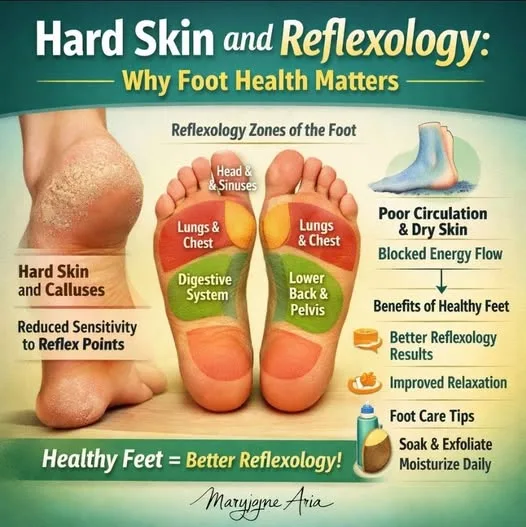
The feet carry us through life. They support our weight, absorb the shock of every step, and adapt constantly to uneven surfaces, long days, and changing footwear. Yet despite this essential role, the feet are often the most neglected part of the body. Many people only begin to think about them when pain appears, when hard skin forms, or when discomfort makes walking difficult.
In holistic health traditions, the feet are seen as far more than simple structures of bone, muscle, and skin. Within the practice of reflexology, they are viewed as a detailed map of the body itself.
Reflexology is a complementary therapy based on the idea that specific points on the feet correspond to organs, glands, and systems throughout the body. By applying targeted pressure to these reflex points, practitioners aim to stimulate the nervous system, encourage circulation, and promote balance within the body. While reflexology may not be a diagnostic or medical treatment, it has been practiced in various forms for thousands of years and remains widely used for relaxation and wellbeing.
The condition of the feet plays an important role in this practice. When the feet are neglected, reflexologists often find that thick skin, dryness, and calluses can interfere with the sensitivity of reflex points. From their perspective, well cared for feet allow clearer access to these areas, making reflexology treatments more effective and comfortable.
A Brief History of Reflexology
Forms of foot therapy appear in several ancient cultures. Historical evidence shows that pressure techniques involving the feet were used in ancient Egypt, China, and India. One of the most well known visual records appears in a tomb painting from ancient Egypt dating back more than four thousand years. The artwork depicts practitioners applying pressure to the hands and feet of individuals, suggesting that early forms of reflex therapy were already recognized.
Modern reflexology developed in the early twentieth century. Physicians and therapists began mapping the body into zones that extended through the hands and feet. These zones were believed to connect through the nervous system, allowing stimulation in one area to influence another.
Today reflexology is practiced worldwide in spas, wellness clinics, and integrative health settings. Many people seek it for relaxation, stress relief, and improved circulation.
The Foot as a Map of the Body
In reflexology theory, the entire body is represented on the feet. The toes correspond to the head and neck, the ball of the foot reflects the chest and lungs, the arch relates to digestive organs, and the heel connects to the lower back and pelvic region.
Practitioners apply pressure to these areas using their fingers and thumbs. The goal is to stimulate nerve pathways and encourage the body's natural ability to regulate itself.
Because reflexologists rely heavily on touch, the condition of the skin and tissues on the feet becomes important. Soft, flexible skin allows practitioners to feel subtle changes in texture, tension, or sensitivity in different reflex areas.
Why Foot Care Matters
Healthy feet are essential not only for comfort but also for overall wellbeing. Proper foot care supports circulation, prevents injury, and reduces the risk of infections.
From a reflexology perspective, good foot care also improves the ability to access reflex points.
Neglected feet often develop thick layers of hard skin. This occurs when repeated pressure or friction causes the body to protect itself by building up calluses. While this is a normal protective response, excessive hard skin can reduce sensitivity in the underlying tissue.
For reflexologists, this can make it more difficult to identify sensitive reflex zones or apply precise pressure. Thick calluses can also make treatments uncomfortable for the person receiving them.
The Effects of Hard Skin on the Feet
Hard skin most commonly forms on the heels, the balls of the feet, and along the edges where pressure is greatest. If left untreated, it may become dry, cracked, or painful.
In reflexology practice, some therapists observe that persistent calluses forming in specific areas may correspond with long term tension in the related reflex zones. For example, thick skin beneath the ball of the foot is sometimes associated with the chest or lung reflex area, while hardened skin along the arch may relate to digestive zones.
It is important to understand that these observations are part of reflexology philosophy rather than established medical science. Medically, calluses are primarily caused by friction, footwear, gait patterns, and pressure distribution.
However, regardless of interpretation, maintaining healthy feet makes reflexology work easier and more effective.
Circulation and the Feet
Another reason foot care matters is circulation. The feet are farthest from the heart and can easily experience reduced blood flow, especially in individuals who spend long hours sitting or standing.
Regular foot care practices such as soaking, massage, and moisturizing help stimulate circulation. Warm feet with good blood flow tend to be more flexible and responsive during reflexology sessions.
Improved circulation also supports skin health, tissue repair, and nerve sensitivity.
Daily Habits That Support Healthy Feet
Caring for the feet does not require complex routines. Simple practices can make a significant difference over time.
Washing the feet daily helps remove sweat, bacteria, and debris that accumulate throughout the day. After washing, drying carefully between the toes helps prevent fungal infections.
Regular moisturizing keeps the skin supple and reduces the formation of cracks, especially around the heels. Natural oils, balms, or creams can help maintain the skin barrier.
Gentle exfoliation removes excess dead skin before it becomes thick calluses. This can be done using a pumice stone or foot file after bathing when the skin is softer.
Proper footwear is also essential. Shoes that distribute pressure evenly and allow room for the toes help prevent friction that leads to calluses and discomfort.
Reflexology as a Supportive Practice
Many people seek reflexology not only for physical benefits but also for relaxation. The feet contain thousands of nerve endings, and gentle pressure applied to them can have a calming effect on the nervous system.
Sessions often leave individuals feeling deeply relaxed, with reduced tension throughout the body. Some report improved sleep, decreased stress, and a general sense of balance.
Reconnecting With the Feet
In modern life, the feet often remain hidden in shoes and receive little attention. Yet they quietly perform an extraordinary task every day, supporting movement, posture, and stability.
Taking time to care for them is not merely cosmetic. Healthy feet contribute to mobility, comfort, and overall wellbeing.
From the perspective of reflexology, they may also offer a doorway to understanding the body in a more connected way.
Whether one believes fully in reflex maps or simply appreciates the relaxing effects of foot massage, one truth remains clear. When we begin to care for our feet, we often discover that the entire body benefits.
Written by Maryjayne Aria author of the book Immune Health, Terrain & GcMAF.
FEEL FREE TO FOLLOW ME
SHARE FROM MY PERSONAL PAGE
SHARE THIS POST



