Many are classified as Group 1 (carcinogenic to humans) or Group 2A (probably carcinogenic to humans) by the International Agency for Research on Cancer (IARC). ALL SHOULD BE AVOIDED.
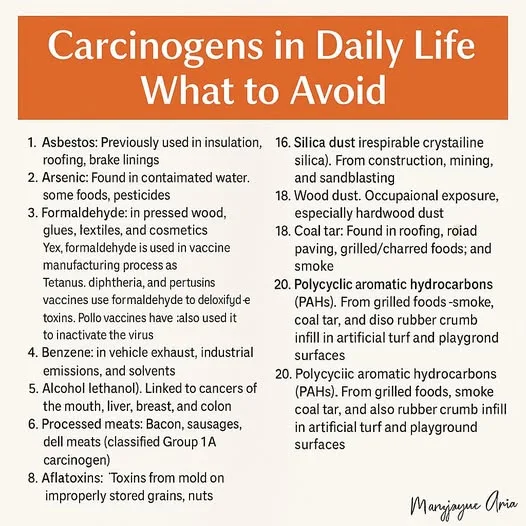
1. Polycyclic aromatic hydrocarbons (PAHs) – From grilled foods, smoke, coal tar, and also rubber crumb infill in artificial turf and playground surfaces.
The PAHs in synthetic turf and playground flooring are especially concerning because children often play directly on these surfaces, and studies have shown measurable transfer of PAHs and heavy metals to their hands and clothing. Heat from the sun also increases the release of these chemicals.
2. Asbestos – Previously used in insulation, roofing, brake linings.
3. Arsenic – Found in contaminated water, some foods, pesticides.
4. Formaldehyde – In pressed wood, glues, textiles, and cosmetics. Also Yes, formaldehyde is used in the vaccine manufacturing process.
For example:
Tetanus, diphtheria, and pertussis vaccines use formaldehyde to detoxify the toxins.
Polio vaccines have also used it to inactivate the virus.
5. Benzene – In vehicle exhaust, industrial emissions, and solvents.
6. Alcohol (ethanol) – Linked to cancers of the mouth, liver, breast, and colon.
7. Processed meats – Bacon, sausages, deli meats (classified Group 1 carcinogen).
8. Red meat (high-temperature cooked) – Classified Group 2A carcinogen.
9. Aflatoxins – Toxins from mold on improperly stored grains, nuts.
10. Ultraviolet (UV) radiation – Sunlight and tanning beds.
11. Diesel exhaust – Emissions from vehicles and machinery.
12. Air pollution (fine particulate matter, PM2.5) – Urban smog, traffic pollution.
13. Polychlorinated biphenyls (PCBs) – Banned industrial chemicals, persistent in the environment.
14. Dioxins – Byproducts of waste incineration, industrial processes.
15. Glyphosate (herbicide) – Classified as "probably carcinogenic" (Group 2A).
16. Per- and polyfluoroalkyl substances (PFAS, “forever chemicals”) – Found in nonstick cookware, water repellents, food packaging.
17. Radon gas – Naturally occurring radioactive gas in homes and buildings.
18. Silica dust (respirable crystalline silica) – From construction, mining, and sandblasting.
19. Wood dust – Occupational exposure, especially hardwood dust.
20. Coal tar and PAHs (polycyclic aromatic hydrocarbons) – Found in roofing, road paving, grilled/charred foods, and smoke.
21.
These exposures can vary greatly depending on occupation, location, and lifestyle. Some are largely occupational (asbestos, silica), others environmental (air pollution, radon), and many are lifestyle-related (tobacco, alcohol, processed meat).
In conclusion, carcinogenic materials are not limited to industrial settings but are found in our homes, workplaces, foods, and even recreational environments. From tobacco smoke and alcohol to air pollution, pesticides, and synthetic surfaces such as artificial turf, exposure is often unavoidable. However, awareness is the first line of defense. By understanding where these carcinogens come from and how they enter our bodies, we can make informed choices to reduce risk.
Simple actions such as limiting processed meats, avoiding unnecessary chemical exposures, testing homes for radon, choosing safer building materials, and questioning the use of synthetic products in children’s environments can all help lower the cumulative burden of carcinogens. No single step will eliminate risk, but a conscious effort to minimize contact with these known hazards offers meaningful protection for long-term health.
Copy right Maryjayne Aria