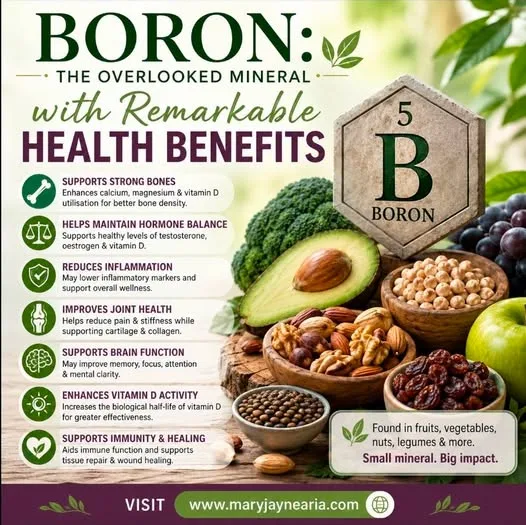
Boron is a naturally occurring trace mineral found in fruits, vegetables, nuts, legumes, and drinking water. Although it is required only in small amounts, research suggests that boron plays an important role in many biological processes. It supports bone health, hormone balance, brain function, immune regulation, wound healing, and the body's ability to utilise essential vitamins and minerals.
Despite its importance, boron receives far less attention than nutrients such as magnesium, zinc, or vitamin D. However, scientific evidence continues to demonstrate that adequate boron intake may offer significant health benefits.
Supports Strong Bones
One of the best studied benefits of boron is its effect on bone metabolism.
Boron helps regulate the body's use of calcium, magnesium, phosphorus, and vitamin D, all of which are essential for maintaining strong bones. Studies have shown that adequate boron intake may reduce urinary calcium loss and improve bone mineral density.
This makes boron particularly important for:
• Postmenopausal women
• Older adults
• Individuals with osteopenia or osteoporosis
• Athletes who place significant stress on their bones
Many researchers consider boron to be a valuable nutritional component of any bone health programme.
Helps Maintain Healthy Hormone Levels
Boron has been shown to influence steroid hormone metabolism.
Research suggests that boron supplementation may increase biologically active levels of:
• Testosterone
• Oestrogen
• Vitamin D
In men, healthy testosterone levels contribute to muscle mass, strength, energy, libido, and cognitive performance.
In women, boron may help support hormone balance after menopause by improving the body's utilisation of oestrogen while also contributing to bone protection.
Reduces Inflammation
Chronic inflammation contributes to many modern diseases, including arthritis, cardiovascular disease, diabetes, and neurodegenerative disorders.
Studies suggest that boron may reduce inflammatory markers such as:
• C-reactive protein (CRP)
• Tumour necrosis factor alpha (TNF-alpha)
• Certain inflammatory cytokines
People living in areas with higher dietary boron intake appear to have lower rates of osteoarthritis compared with populations consuming very little boron.
Improves Joint Health
Several clinical studies have reported improvements in joint pain and stiffness with boron supplementation.
The mineral helps by:
• Supporting cartilage health
• Reducing inflammation
• Improving calcium metabolism
• Supporting collagen formation
Although boron is not a cure for arthritis, it is a useful addition to a comprehensive joint health strategy.
Supports Brain Function
Boron appears to influence electrical activity within the brain.
Research has linked adequate boron intake with improvements in:
• Memory
• Attention
• Concentration
• Hand-eye coordination
• Mental alertness
Conversely, low boron intake has been associated with slower cognitive performance and reduced brain function.
Enhances Vitamin D Activity
Vitamin D is essential for immune function, calcium absorption, and bone health.
Boron appears to increase the biological half life of vitamin D, helping the body use this important nutrient more efficiently.
This is particularly beneficial for individuals who have low vitamin D levels despite supplementation.
Supports Magnesium Utilisation
Magnesium is involved in more than 300 enzymatic reactions within the body.
Boron helps reduce magnesium loss through the urine, allowing the body to retain more of this essential mineral.
Since magnesium supports muscle function, heart health, sleep quality, and nervous system function, improving magnesium retention may provide multiple health benefits.
Support Immune Function
Emerging evidence suggests boron plays a role in regulating immune responses.
It appears to influence the activity of immune cells while helping control excessive inflammation.
Although research is still developing, boron may contribute to maintaining a balanced immune system.
Assists Wound Healing
Laboratory and clinical studies suggest boron contributes to:
• Tissue repair
• Collagen formation
• Skin regeneration
• Faster wound healing
Some boron containing compounds have even been investigated for their antimicrobial properties.
Potential Role in Cancer Research
Researchers continue to investigate boron's possible role in cancer prevention and supportive care.
Laboratory studies suggest certain boron compounds may:
• Reduce tumour growth
• Influence cell signalling
• Promote cancer cell death
• Enhance the activity of some conventional treatments
However, these findings are preliminary. Boron should never be considered a treatment or cure for cancer, and much more human research is required.
Dietary Sources of Boron
Good food sources include:
• Avocados
• Raisins
• Prunes
• Dates
• Apples
• Pears
• Almonds
• Walnuts
• Hazelnuts
• Peanuts
• Chickpeas
• Lentils
• Kidney beans
• Broccoli
• Potatoes
• Coffee
• Red wine (in moderation)
The boron content of foods varies depending on soil quality.
Supplementation
Most supplements provide between 1 mg and 6 mg of boron daily.
Many practitioners recommend between 3 mg and 6 mg per day for general health, although higher doses have been investigated under medical supervision.
Common forms include:
• Boron glycinate
• Boron citrate
• Boron aspartate
• Calcium fructoborate
Calcium fructoborate has received particular attention for supporting joint health.
Safety
Boron is generally well tolerated when consumed within recommended amounts.
Excessively high doses may cause:
• Nausea
• Vomiting
• Diarrhoea
• Skin irritation
• Headache
Individuals with kidney disease should consult a healthcare professional before taking boron supplements because impaired kidney function may reduce boron excretion.
Conclusion
Although often overlooked, boron is a remarkably important trace mineral. It supports healthy bones, hormone balance, brain function, joint health, immune regulation, and the body's efficient use of vitamin D and magnesium.
For many people, ensuring adequate boron intake through a balanced diet or sensible supplementation may provide meaningful health benefits. As research continues, boron is increasingly being recognised as one of the most valuable micronutrients for supporting overall health and healthy ageing.
Written by Maryjayne Aria author of Immune Heath, terrain and GcMaf



