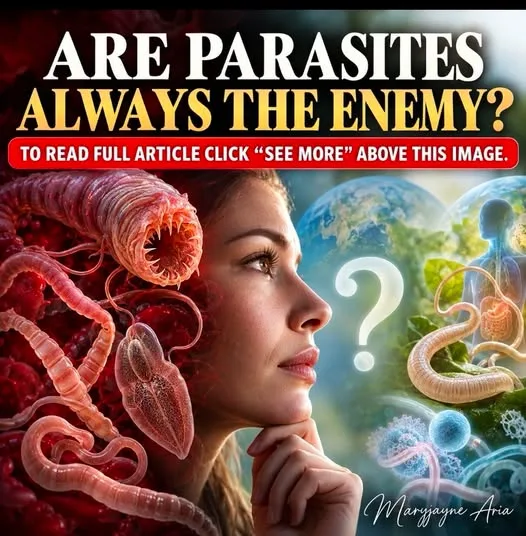
The more I study parasites, the more I realise how much there is still to understand about these extraordinary organisms and their relationship with the human body. I have never been satisfied with accepting a simple explanation when biology presents us with something far more complex. We are taught to think of parasites as enemies, invaders that enter the body, cause harm and must be eliminated. And yes, some parasites can cause devastating disease, and their dangers must never be underestimated. But I find myself returning to a question that deserves far more thought: are parasites always the enemy, or have we oversimplified a subject that demands a much deeper scientific investigation?
I believe we need to look beyond the fear associated with the word parasite and start examining the biology, the evidence and the relationships that exist between these organisms and their hosts. Nature does not operate according to simple labels of good and bad. Organisms interact in ways that can be destructive, neutral or remarkably complex, depending on the circumstances. Understanding those interactions does not mean defending harmful infections or suggesting that parasites are somehow beneficial to everyone. It means being willing to ask questions, investigate the evidence and acknowledge that the natural world is far more complicated than the explanations we often accept without a second thought.
What interests me most is not simply what parasites can do to the human body, but what studying them can teach us about immunity, disease, adaptation and the delicate biological relationships that influence health. The more questions we ask, the more important it becomes to distinguish established scientific findings from assumptions and unanswered questions. For me, that is where genuine investigation begins: not with fear, not with blind acceptance, but with the willingness to look deeper.
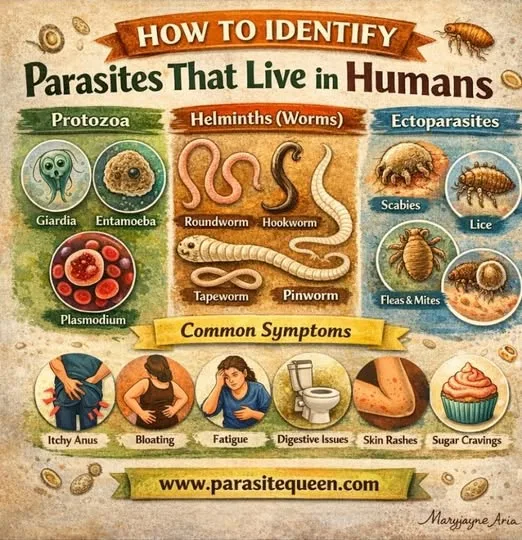
Parasites are not all the same, and neither are their effects on the human body. Some can cause severe disease, damage organs, deprive the body of nutrients or trigger dangerous complications. Others can live within a host for years, sometimes producing few obvious symptoms until circumstances change. The outcome depends on the species involved, the number of organisms present, where they live, the person's immune response and many other factors. A parasite that causes serious illness in one person may produce a very different clinical picture in another. This variability is precisely why I believe the subject deserves careful investigation rather than assumptions based on a single symptom, a single test or a generalised understanding of what parasites do.
But here is where the discussion becomes particularly interesting. In nature, parasites are part of an interconnected biological system. They influence host populations, affect food webs and participate in the ongoing relationship between organisms and their environments. Some parasites can alter the behaviour of their hosts in ways that improve their own chances of survival and transmission. Others influence the balance between competing species. These relationships are not evidence that parasites are harmless, nor do they mean that infection is beneficial to humans. They demonstrate something important: the biological role of a parasite cannot always be understood by looking at the parasite alone. We must also consider the host, the environment and the wider ecological relationship.
This brings me to a question I believe deserves much more attention: can an organism be harmful under certain circumstances without being inherently harmful in every possible context? The answer in biology is often yes, although we must be precise about what that means. Some parasitic organisms have evolved alongside their hosts over long periods, developing relationships that vary in their effects. Certain infections may remain relatively controlled, while others can become destructive. A host's immune system may limit the infection, but the immune response itself can also contribute to tissue damage. The interaction between a parasite and the human body is therefore not always a straightforward battle between an invader and a defender. It is a dynamic biological relationship, and understanding that relationship matters when investigating disease.
There is also an important distinction between asking whether parasites are always the enemy and suggesting that humans need parasites to be healthy. These are two entirely different questions. Research into the human microbiome, immune regulation and the hygiene hypothesis has explored how exposure to certain microorganisms and environmental organisms may influence immune development. Some helminths, or parasitic worms, have also been investigated for their ability to influence immune pathways. However, evidence that an organism can modify an immune response does not establish that a natural infection is beneficial, or that deliberately acquiring a parasite is a sensible way to improve health. The challenge is to understand the biological mechanisms without confusing scientific curiosity with conclusions the evidence has not established.
I am particularly interested in the questions that arise when we consider persistent, unexplained symptoms. Could a parasitic infection be contributing to an illness in a particular patient? Is the relevant species capable of infecting humans? Does the person's history support that possibility? Have appropriate diagnostic tests been selected, and have their limitations been understood? These are reasonable questions to ask when the clinical circumstances justify investigating a parasitic disease. At the same time, symptoms such as fatigue, digestive disturbances, skin irritation and unexplained changes in health can have many causes. Their presence alone cannot establish a parasitic infection, and finding a convincing explanation requires more than matching symptoms to a list found online. I believe people deserve thoughtful investigations, clear explanations and an opportunity to understand why particular possibilities are being considered or ruled out.
We must also recognise that testing for parasites is not one universal process. Different species require different diagnostic approaches, and the appropriate investigation depends on the suspected organism, the symptoms, the person's exposure history and the affected part of the body. Stool microscopy, antigen testing, molecular methods, blood tests, imaging and tissue examination all have specific roles in particular circumstances. Some infections may be difficult to identify with a single test, while other conditions can be investigated effectively using established diagnostic methods. The important question is not simply whether someone has been tested, but whether the investigation was appropriate for the suspected infection and whether the findings were interpreted in context. Equally, an inconclusive result does not automatically prove that an infection is present, just as an unusual symptom does not establish that a parasite is responsible.
For me, the real issue is how we approach the subject. I do not believe that every parasite should be viewed through the same lens, but neither do I believe that we should romanticise organisms capable of causing serious illness. Scientific curiosity requires us to examine uncomfortable questions, investigate credible possibilities and remain willing to revise our understanding when reliable evidence warrants it. It also requires us to distinguish established findings from theories that still need testing. We should be able to discuss the complexity of host-parasite relationships without automatically dismissing a question simply because it challenges a familiar assumption, while also refusing to treat speculation as proof.
So, are parasites always the enemy? When a parasite causes disease, the priority must be accurate diagnosis and appropriate treatment. But as a broader biological question, the answer deserves more thought than a simple yes or no. Parasites are diverse organisms with different life cycles, different effects on their hosts and different roles within ecosystems. Studying them can teach us much about immunity, evolution, disease and the intricate relationships that shape life. The more we understand those relationships, the better equipped we are to distinguish genuine threats from misconceptions and unanswered questions from established scientific knowledge.
I want to encourage people to become informed, ask meaningful questions and look carefully at the evidence. We do not advance our understanding of human health by accepting every assumption without examination, nor by replacing established evidence with unsupported claims. We advance by asking better questions, investigating carefully and being honest about what we know and what we have yet to discover. That, to me, is where the most valuable discussion about parasites begins.
I WANT TO HEAR YOUR EXPERIENCES.
Have you ever investigated the possibility of a parasitic infection after experiencing persistent or unexplained symptoms? Were appropriate tests offered, and did you receive a clear explanation of the results? I would be interested to hear your experiences and the questions they raised for you, add to comments. Personal accounts can highlight subjects that deserve further investigation, and sharing experiences can help others become more informed about the different ways parasitic infections are investigated.
Please share this article to increase awareness and encourage a wider discussion about parasites and human health. If you would like to explore the subject further with others who share an interest in parasite awareness, you are welcome to join my Parasite Queen group: https://www.facebook.com/groups/711577811230403/
Copyright © Maryjayne Aria