The placebo effect is one of the most fascinating phenomena in medicine. It demonstrates the remarkable connection between the brain and the body, showing that our expectations, beliefs, and mindset can sometimes influence how we feel and even how our bodies respond to treatment.
A placebo is a treatment that contains no active medical ingredient. It may be a sugar pill, a saline injection, or another inactive intervention designed to resemble a real treatment. Despite having no direct therapeutic effect, many people report genuine improvements after receiving a placebo.
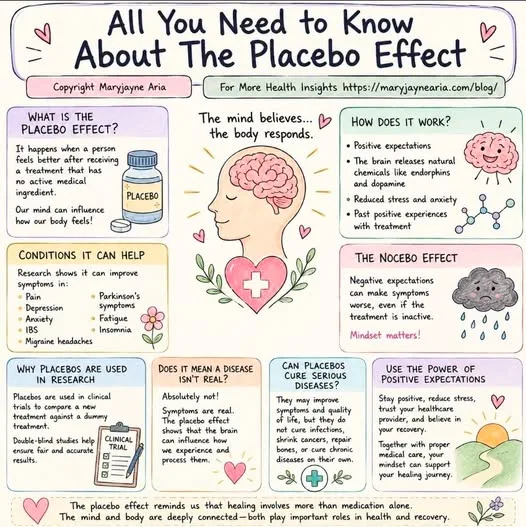
How Does the Placebo Effect Work?
The placebo effect occurs when a person experiences a real improvement in symptoms because they believe they are receiving an effective treatment. This is not "imagined" or "fake." Brain imaging studies have shown measurable changes in brain activity during placebo responses.
Scientists believe several factors contribute to the placebo effect:
• Positive expectations that a treatment will work.
• The brain releasing natural chemicals such as endorphins and dopamine.
• Reduced stress and anxiety, which can improve overall well-being.
• Previous positive experiences with medical treatments.
Conditions Where the Placebo Effect Is Strongest
Research has shown that the placebo effect can influence many symptoms, including:
• Pain
• Depression
• Anxiety
• Irritable bowel syndrome (IBS)
• Migraine headaches
• Parkinson's disease symptoms
• Fatigue
• Insomnia
In some cases, placebo responses can be surprisingly powerful, although they rarely cure the underlying disease.
The Nocebo Effect
Just as positive expectations can improve symptoms, negative expectations can make symptoms worse. This is known as the nocebo effect.
For example, if someone expects a harmless medication to cause headaches or nausea, they may genuinely experience those symptoms even though the treatment itself is inactive.
Why Placebos Are Used in Research:
Placebos play a critical role in medical research. In clinical trials, researchers compare a new treatment against a placebo to determine whether the treatment performs better than expectation alone.
Double-blind studies, where neither the participant nor the researcher knows who receives the active treatment, help reduce bias and produce more reliable results.
Does the Placebo Effect Mean a Disease Isn't Real?
Absolutely not.
The placebo effect does not mean symptoms are imaginary. Pain, fatigue, anxiety, and many other symptoms are genuine experiences. The placebo effect simply demonstrates that the brain can influence how these symptoms are perceived and processed.
Can Placebos Cure Serious Diseases?
Current scientific evidence suggests that while placebos may improve symptoms, quality of life, and a person's sense of well-being, they do not eliminate infections, shrink cancers, repair broken bones, or cure chronic diseases by themselves.
They are most effective at influencing symptoms rather than treating the underlying cause of disease.
Harnessing the Power of Positive Expectations:
While no one should rely on placebos instead of proven medical treatments for serious conditions, maintaining a positive outlook, reducing stress, trusting your healthcare provider, and believing in your recovery can all support better health outcomes alongside appropriate medical care.
The placebo effect reminds us that healing involves more than medication alone. The mind and body are deeply connected, and both play important roles in health and recovery.
Copyright Maryjayne Aria