Parasites have coexisted with humans for thousands of years. While some remain relatively harmless, others can cause significant illness, nutritional deficiencies, chronic inflammation, and even life threatening complications if left untreated. Many parasitic infections are more common than people realize and affect hundreds of millions of individuals worldwide.
Understanding the different types of parasites, how they are transmitted, the symptoms they produce, and how to reduce your risk of infection is an important step toward protecting your health.
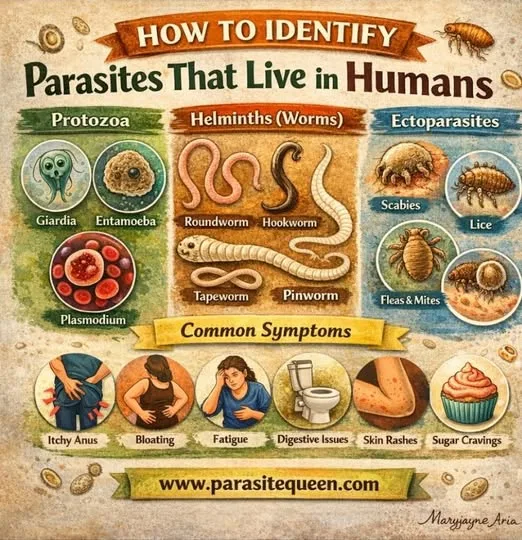
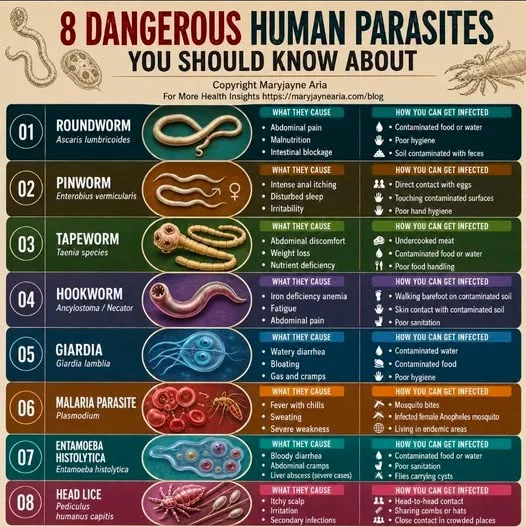
1. Roundworm (Ascaris lumbricoides)
Roundworm is one of the largest and most common intestinal worms that infect humans. Adult worms can grow over 30 cm (12 inches) long and live in the small intestine.
How infection occurs
People usually become infected by swallowing microscopic eggs present in contaminated food, water, or soil. Poor sanitation greatly increases the risk.
Common symptoms
• Abdominal pain
• Bloating
• Poor appetite
• Malnutrition
• Intestinal blockage in severe infections • Coughing during the stage when larvae migrate through the lungs
Heavy infections can interfere with normal digestion and nutrient absorption.
2. Pinworm (Enterobius vermicularis)
Pinworms are tiny white worms that commonly infect children, although adults can also become infected.
Female worms migrate to the skin around the anus at night to lay thousands of microscopic eggs.
Common symptoms
• Intense itching around the anus
• Restless sleep
• Irritability
• Difficulty concentrating
Pinworms spread very easily through contaminated hands, clothing, bedding, toys, and household surfaces.
3. Tapeworm (Taenia species)
Tapeworms are long, flat segmented worms that may reach several metres in length.
People usually acquire them by eating undercooked beef, pork, or fish containing larval cysts.
Symptoms
• Mild abdominal discomfort
• Nausea
• Weight loss
• Nutrient deficiencies
• Fatigue
Certain species, particularly the pork tapeworm, can cause cysts to develop in the brain or muscles, leading to a condition known as cysticercosis, which can trigger seizures and neurological complications.
4. Hookworm (Ancylostoma and Necator species)
Hookworms are small worms that enter the body by penetrating the skin, usually through bare feet walking on contaminated soil.
Once inside the body, they migrate to the lungs before eventually reaching the small intestine.
Common symptoms
• Iron deficiency anaemia
• Fatigue • Weakness
• Abdominal pain
• Poor growth in children
Hookworms feed on blood, and long term infections can lead to significant blood loss.
5. Giardia (Giardia lamblia)
Giardia is a microscopic protozoan parasite that infects the small intestine.
It is one of the most common causes of waterborne diarrhoeal illness worldwide.
Infection sources
• Untreated drinking water
• Contaminated food
• Daycare centres
• Person to person transmission
Symptoms
• Watery diarrhoea
• Bloating
• Excessive gas
• Stomach cramps
• Foul smelling stools
• Weight loss
Some individuals develop chronic digestive symptoms that persist for months after infection.
6. Malaria Parasite (Plasmodium species)
Malaria is caused by Plasmodium parasites transmitted through the bite of infected female Anopheles mosquitoes.
Unlike intestinal parasites, malaria infects red blood cells and can rapidly become life threatening.
Symptoms
• High fever
• Chills
• Heavy sweating
• Headache
• Muscle aches
• Severe weakness
Without prompt treatment, malaria can cause organ failure, severe anaemia, cerebral malaria, and death.
7. Entamoeba histolytica
This microscopic amoeba causes amoebiasis, an intestinal infection that ranges from mild diarrhoea to severe disease.
People become infected by swallowing cysts found in contaminated food or water.
Symptoms
• Bloody diarrhoea
• Abdominal cramps
• Fever
• Weight loss
In severe cases, the parasite may spread through the bloodstream to the liver, causing painful liver abscesses that require urgent medical treatment.
8. Head Lice (Pediculus humanus capitis)
Head lice are external parasites that live on the scalp and feed on human blood.
Although they do not usually spread serious diseases, they can cause considerable discomfort.
Symptoms
• Persistent itchy scalp
• Small eggs (nits) attached to hair shafts
• Skin irritation from scratching
• Secondary bacterial skin infections
Head lice spread primarily through direct head to head contact and are especially common among school aged children.
How Do Parasites Affect the Human Body?
Parasites survive by using the human body as their source of food and shelter. Depending on the species, they may:
• Consume nutrients intended for the host
• Feed on blood
• Damage intestinal tissues
• Trigger chronic inflammation
• Disrupt the gut microbiome
• Produce waste products that stimulate immune responses
• Release substances that help them evade the immune system
The severity of illness depends on the parasite involved, the number of organisms present, nutritional status, immune function, and any underlying medical conditions.
Who Is Most at Risk?
Higher risk groups include:
• Young children
• Older adults
• International travellers
• Individuals with weakened immune systems
• People living in areas with poor sanitation
• Those consuming untreated water
• Individuals who frequently eat undercooked meat or fish
Reducing Your Risk
Simple preventive measures can dramatically lower the risk of infection.
These include:
• Wash hands thoroughly before eating and after using the toilet.
• Drink clean, safe water.
• Wash fruits and vegetables carefully.
• Cook meat and fish thoroughly.
• Wear shoes outdoors where soil contamination may occur.
• Maintain good household hygiene.
• Avoid swallowing water from lakes and streams.
• Practice proper sanitation when travelling.
Diagnosis
Modern diagnosis may include:
• Stool microscopy
• Stool antigen testing
• PCR testing
• Blood tests
• Serology
• Imaging studies for tissue infections
• Specialised testing depending on the suspected parasite
Correct identification is important because different parasites require different treatments.
Final Thoughts
Parasitic infections remain a significant global health concern, affecting billions of people each year. While many infections cause only mild symptoms, others can lead to chronic illness, nutritional deficiencies, anaemia, organ damage, or serious neurological complications.
Recognising potential symptoms, understanding how parasites spread, and adopting sensible hygiene and food safety practices can substantially reduce the risk of infection. Persistent gastrointestinal symptoms, unexplained weight loss, chronic fatigue, or prolonged diarrhoea should always be assessed by a qualified healthcare professional to determine the underlying cause and ensure appropriate treatment.